
Textbook pages: 1 – 9 | Lessons: 1.1 Classification of Sources · 1.2 Importance of Learning History · 1.3 Protecting Archaeological Sources
1.0 Introduction
- Sources are the writings and creations of people who lived in the past. Information about past human activities can be extracted from them, so they are called sources.
- When information from the sources is studied logically, the history of people's lives in each period is built.
- Sources are divided into two main groups:
| Group | What it includes |
|---|---|
| Literary sources | Books and documents written at different times by people of the past |
| Archaeological sources | Relics, monuments, coins, inscriptions and ruins unearthed by archaeological excavations and experiments |
1.1 Classification of Sources
A. Literary Sources
Literary sources of Sri Lankan history are of two kinds: local and foreign.
(i) Local literary sources
Texts written by Sri Lankans, in prose and poetry, from about two thousand years ago.
Deepawamsa
- Considered the oldest text of Sri Lanka; written about the 4th century A.D.
- Contains the history of the country up to the end of King Mahasen's reign and the history of the Buddhist order (Sasana).
- Events are recorded briefly, and there are repetitions.
Mahawamsa
- Composed as a chronicle with fewer mistakes than Deepawamsa.
- A text with several parts. The first part was written by Mahanama Thero, who lived in the Diksanda Seneviya Pirivena (a monastery affiliated to the Anuradhapura Maha Vihara), in about the 5th or 6th century A.D.
- First part covers the arrival of the Buddha to the end of King Mahasen's reign – similar to Deepawamsa, because both were influenced by earlier texts: Seehala Attakatha Mahawamsa, Uttara Vihara Attakatha and Vinaya Attakatha.
- Later writers added information about their own times, so the history of Sri Lanka is written continuously in one text – few countries can claim this.
- Regarded as credible because many of its events are confirmed by inscriptions and other sources.
- Mahawamsa Teekawa (annotation) – written in Pali about four centuries after the first part; named Wansattappakasini; contains information not found elsewhere.
Other local literary works
| Type | Examples | Use |
|---|---|---|
| Buddhist religious texts | Bodhiwamsa, Thupawamsa, Dhatuwamsa, Poojawaliya, Saddharmalankaraya | Study of the Rajarata civilization |
| Chronicles | Nikaya Sangraha (history of the Buddhist order); Rajawaliya (political information) | Gampola to Kotte period |
| Poetry | Sandesha, Prashasthi and Hatan Kawya | Kotte to Kandy period |
Table 1.1 – Types of ancient literary sources
| Type of source | Examples |
|---|---|
| Sandesha Kawya (message poems) | Mayura, Thisara, Selalihini Sandesha |
| Prashasthi Kawya (praise poems) | Perakumba Siritha |
| Hatan Kawya (war poems) | Seethawaka Hatana, Constantinu Hatana, Ingirisi Hatana |
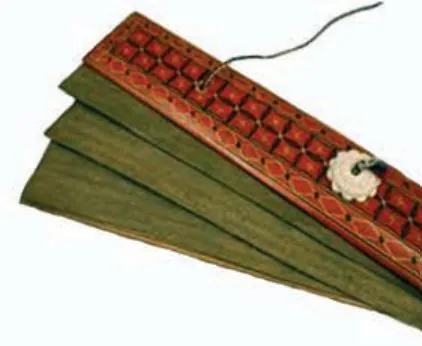 Fig 1.1 – Ancient literary and religious information, including the Wamsakatha, were written on ola leaves
Points to consider when using a literary source (4 questions)
- The time in which the source was written
- The author of the source
- The author's objectives
- The way the facts were obtained
Books from the Anuradhapura era to the start of the Kotte era had mainly religious objectives, and some were written centuries after the events they describe.
(ii) Foreign literary sources
- Sri Lanka traded with foreign countries from the early Anuradhapura era, so traders of the Indian Ocean knew the island.
- Some Indian Tamil books – Seelappadikaram, Manimekalayi and Padirruppattu – mention Sri Lanka.
- After the Portuguese arrived (16th century), some foreigners wrote books specifically about Sri Lanka.
- Some writers visited the island; others never came and wrote from what they heard.
Table 1.2 – Writers who came to Sri Lanka
| Source | Author / Book |
|---|---|
| Chinese | Fa-Hsien Thero – travel account (Account on Buddhist Kingdom) |
| Arabian | Ibn Batuta – travelling accounts |
| Portuguese | Ribeiro – book on Sri Lanka |
| Dutch | Philippus Baldaeus – The Sri Lankan Chronicle of Baldaeus |
| English | Robert Knox – An Historical Relation of the Island Ceylon |
Table 1.3 – Writers who never saw the country
| Source | Author / Book |
|---|---|
| Greek | Demundo by Aristotle; Indica by Megasthenes; records of Onesicritus |
| Roman | Naturalis Historia by Pliny; Approach to Geography and a map of Sri Lanka by Ptolemy |
| Chinese | Travel records of Hsuan-Tsang Thero |
| Portuguese | Book by Father Fernão de Queiroz |
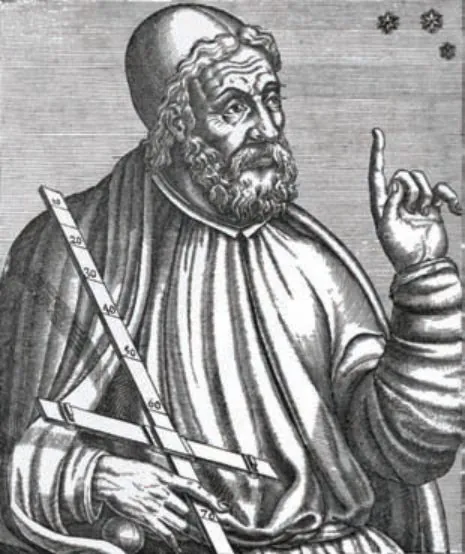 Fig 1.2 – Claudius Ptolemy (90–168 A.D.), geographer of Alexandria, who drew a map of Sri Lanka
Key foreign writers (textbook box, p. 9)
| Name | Background | Dates | Key points |
|---|---|---|---|
| Fa-Hsien | Chinese monk | 5th century A.D. | Walked to India seeking Buddhist texts; stayed two years in the Anuradhapura Maha Vihara |
| Hsuan Tsang | Chinese monk (602–664 A.D.) | Left China 629 A.D.; 16-year pilgrimage | Did not visit Sri Lanka; recorded what he learnt in India – useful for the 7th century |
| Joao Ribeiro | Portuguese | Came March 1640 | 18 years in the Portuguese army; became a captain; wrote in Lisbon – useful for the 17th century |
| Philippus Baldaeus | Dutch priest | 1632–1672 | Came with the Dutch army (Dutch East India Company); recorded social life, language, culture; published in Dutch and German |
| Robert Knox | English naval captain | 1641–1720 | Ship's mast broke in a storm; arrested by King Rajasinghe II with 16 others; 19 years a prisoner; escaped via Arippu, Mannar; reached England 1680; book published 1681 |
| Fernão de Queiroz | Portuguese Jesuit priest | 1688 | Wrote Temporal and Spiritual Conquest of Ceylon in India, never visited |
Exam tip: Separate writers who came (Fa-Hsien, Ribeiro, Baldaeus, Knox) from those who did not come (Hsuan Tsang, Queiroz, Ptolemy, Pliny, Megasthenes).
Uses of literary sources
- To prepare the historical chronology.
- To obtain political, economic and social information of each era.
- To substantiate information of one source with another.
- To study the international relations of a country (foreign sources are very important).
B. Archaeological Sources
Categories: epigraphy, coins, ruins, drawings, sculptures and antiquities.
(i) Epigraphy
Writings on stone, clay slabs, walls, copper plates, golden plates, wood and urns. Writings on stone slabs or rocks = inscriptions (Sellipi / Shilalipi).
- The oldest inscriptions are in Brahmi script, recording events such as offering caves to Bhikkus; they help to understand ancient society and the spread of settlements.
- Inscriptions continued from the 2nd century B.C. to the Kandyan kingdom.
- After the 2nd century A.D. they recorded offering premises to temples, temple administration, government laws, taxes, trading, pardon of convicts and appreciation of service.
Table 1.4 – Media of epigraphy
| Medium | Example |
|---|---|
| Stone | King Nissankamalla's Galpotha inscription (Polonnaruwa) |
| Walls | The graffiti in Sigiriya |
| Copper plate | Panakaduwa Copper Plate of King Vijayabahu I |
| Golden plate | Vallipuram golden plate |
| Wood | Writings on wooden posts of Ambekke Devalaya |
| Clay | Scripts on tiles and bricks |
| Urns | Scripts on clay pots and begging bowls |
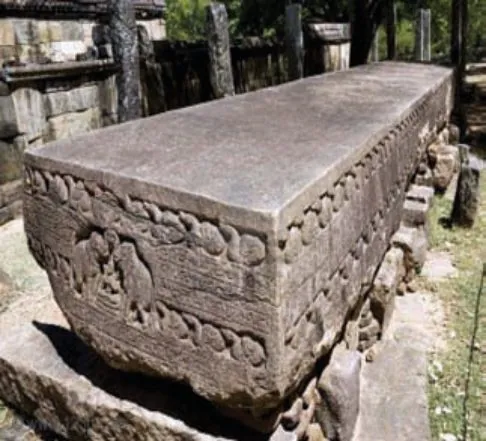 Fig 1.3 – Galpotha inscription of King Keerthi Sri Nissankamalla, Polonnaruwa
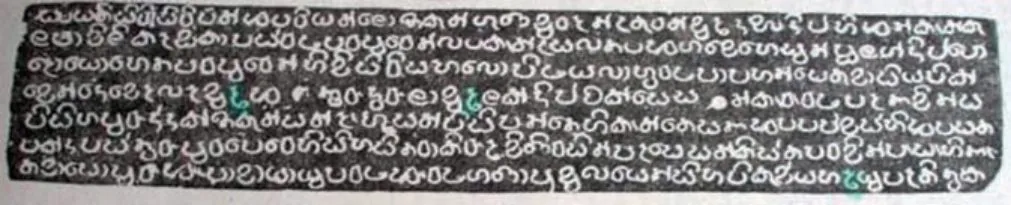 Fig 1.4 – Panakaduwa copper plate written on the order of King Vijayabahu I; important for the 12th century A.D.
Table 1.5 – Inscriptions by location
| Type | Where written |
|---|---|
| Cave inscriptions | Near the drip ledges of caves |
| Rock inscriptions (Giri Lipi) | On rock surfaces |
| Pillar inscriptions (Tam Lipi) | On arranged stone pillars |
| Slab inscriptions (Puwaru Lipi) | On arranged stone slabs |
| Seat inscriptions (Asana Lipi) | On stone slabs like an altar or pulpit |
(ii) Coins
- Used from the Anuradhapura era. The oldest are Kahapana (also Purana, Dharana).
- Types: tusker and Swastika coins, Lakshmi coins, a gold coin called Aka; copper coins (Thamba Massa) in the Polonnaruwa kingdom.
- Coins were made locally (even moulds have been found); Roman, Chinese and Indian coins are also found – evidence of trade.
- Study of ancient coins = numismatics. Coins reveal the economy, trade and use of metals.
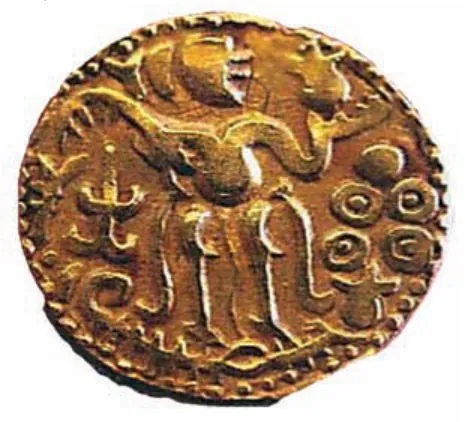 Fig 1.5 – A medieval gold coin (Madyakalina Ran Kahawanu); a source for the economy and technology
(iii) Ancient ruins
Buildings, stupas, stone pillars, tanks and ponds. They show creative ability, technology, architecture, craftsmanship, environmental conservation and water management.
(iv) Drawings, sculpture and antiquities
- Show clothes, art skills, jewellery, colours and religious beliefs – e.g. the Sigiriya frescoes show women's clothes, jewellery, hair styles and beauty culture.
- Antiquities = objects made or used by ancient people; kept in museums, religious places and by individuals; many found in excavations.
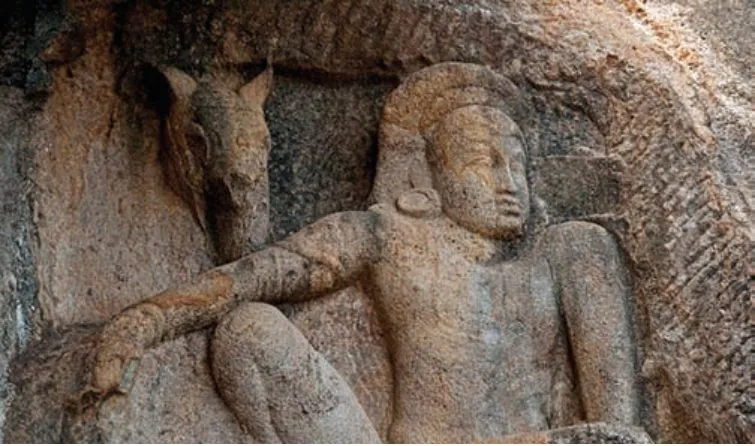 Fig 1.6 – The 'Man and Horse's Head' sculpture at Isurumuni, Anuradhapura (7th–8th century A.D.): Agni (horse's head) and Parjanya (man)
Literary vs archaeological sources
| Feature | Literary sources | Archaeological sources |
|---|---|---|
| Nature | Reports of past events | Physical remains |
| Time of creation | Often later than the events | Mostly contemporary with the events |
| Bias | Authors' personal likes and dislikes may enter | Less affected by bias |
| Example | Mahawamsa, Deepawamsa | Inscriptions, coins, Sigiriya frescoes |
If a literary account is substantiated by archaeological evidence, it is considered credible. Use all sources, analyse them critically, and build history from the most credible information.
1.2 Importance of Learning History
Reading history develops a critical sense, logical thinking and creative problem solving, and builds personality. Benefits:
- Proper understanding of the society and world one lives in.
- Building the future by understanding the present through past experience.
- Recognizing the national identity.
- Building national reconciliation by loving humanity.
- Respecting others' cultures.
- Tolerating different views.
1.3 Protecting Archaeological Sources
- Only works of long-lasting materials (stone, metal, clay) and large works (tanks, canals) survive.
- Threats: speedy urbanization, expansion of settlements, road and building construction, agriculture, treasure hunting, and scribbling or drawing on monuments.
- Marks carved on rocks (Sun, Moon, Palmyra-fan, bow, arrow, conch, ox-hoof, tusker-step, animals) are ancient border marks or an ancient form of communication like road signs; moonstones and guard stones are also antiquities.
- Destroying them is a punishable offence; protecting them is the duty of every citizen.
Important Facts
- Things that help learn history are sources: literary and archaeological.
- Books and documents = literary; ruins and antiques = archaeological.
- Learning history shows how ancestors faced experiences, giving knowledge to face similar problems.
- A country's history reflects the identity of its citizens.
Timeline – Unit 1
| Date | Event |
|---|---|
| 2nd century B.C. | Inscriptions begin (Brahmi) |
| 4th century A.D. | Deepawamsa written |
| 90–168 A.D. | Ptolemy (map of Sri Lanka) |
| 5th century A.D. | Fa-Hsien in Anuradhapura (2 years) |
| 5th/6th century A.D. | First part of Mahawamsa (Mahanama) |
| 602–664 A.D. | Hsuan Tsang |
| 1632–1672 | Baldaeus |
| 1640 | Ribeiro arrives |
| 1659 | Robert Knox's ship drifts to Sri Lanka |
| 1680 / 1681 | Knox returns / publishes his book |
| 1688 | Queiroz's book |
Exam focus
- Classify given sources as literary or archaeological.
- Why is Mahawamsa credible? Why are archaeological sources considered reliable?
- Four points to check when using a literary source.
- Match foreign writers with their books and say whether they visited Sri Lanka.
- Benefits of learning history; ways to protect archaeological sites.
Activity (p. 8): Classify Deepawamsa, Mahawamsa, An Historical Relation of the Island Ceylon, Perakumba Siritha, Sigiriya, Seethawaka Hatana, Panakaduwa Copper Plate, Ptolemy's map, Vallipuram Golden Plate and VOC coins as literary or archaeological. (Literary: Deepawamsa, Mahawamsa, Knox's book, Perakumba Siritha, Seethawaka Hatana. Archaeological: Sigiriya, Panakaduwa plate, Vallipuram plate, VOC coins. Ptolemy's map is a foreign source drawn by a writer who never visited the island.)