
Textbook pages: 10 – 30 | Lessons: 2.1 Settlements in the Pre-historic Era · 2.2 Settlements in the Proto-historic Era · 2.3 Settlements in the Early Historic Era
2.0 Introduction
- Sri Lanka became a human habitation about 125 000 years ago. Homo Sapiens (modern man) migrated across the Indian Ocean and adapted to different environmental zones.
- Because of cultural change, human history in Sri Lanka is divided into three stages:
| Stage | Period | Main features |
|---|---|---|
| Pre-historic era (Stone Age) | c. 125 000 years ago – at least 1800 B.C. | Stone tools; hunting and gathering; roaming (nomadic) life; caves and open camps |
| Proto-historic era (early Iron Age) | From about 2400 B.C. | Iron, burnt pots, methodical burials (megalithic), beginning of agriculture and permanent settlement |
| Early historic era | 450 B.C. – 300 A.D. | Village tanks, village settlements, Brahmi inscriptions, early cities |
2.1 Settlements in the Pre-historic Era
Evidence and where it was found
| Place | Evidence |
|---|---|
| Rathnapura and its gem mines | Stone tools and bones of extinct animals in the gravel layer (lode) about 90 feet deep |
| Iranamadu formation (semi-arid zone) | Gravel layer with sandy clay soil; Stone Age tools |
| Pathirajawela (Hambantota district) | Gravel layer 45 feet deep – dated 125 000 years |
| Bundala, Wellegangoda | 24 feet deep – about 80 000 years |
- The gravel layers came from erosion of mountains in the extremely rainy Pleistocene era.
- Iranamadu Deposit: laid down during short warm periods of the Pleistocene; a soil belt about 32 km stretching from the coast inland; named after the Iranamadu tanks, where it was first clearly identified.
- Archaic Homo Sapiens: the earliest Homo Sapiens, lived between 500 000 and 200 000 years ago.
Map 2.1 – Distribution of the pre-historic places discovered in Sri Lanka, with six environmental zones — practise it on the interactive map.
Six environmental zones
| Letter | Zone | Example sites |
|---|---|---|
| A | Semi-arid zone | Minihagalkanda, Bundala, Pathirajawela (coastal open camps) |
| B | Lowland dry zone | Pothana and Aligala, Sigiriya (caves) |
| C | Lowland intermediate dry zone | – |
| D | Wet zone | Pahiyangala, Batadombalena, Kithulgala Beli Lena (caves); Bellanbendipelessa (open camp) |
| E | Mountainous dry intermediate zone | Bandarawela, Horton Plains (open hunting places) |
| F | Arid zone | Northern region |
Zones are decided by differences in annual rainfall. Rainfall affects animals and plants, so food and technology differed. Wet-zone people ate many land snails; in the dry zone they hunted deer and iguana.
Map 2.1 – examination areas to mark: Pahiyangala, Batadombalena, Kithulgala Beli Lena, Bellanbendipelessa, Pothana, Aligala, Minihagalkanda, Pathirajawela, Bundala, Horton Plains, Bandarawela, Rathnapura, Iranamadu, Rawana Ella, Mannar region sites (e.g. Punkari, Iranamadu).
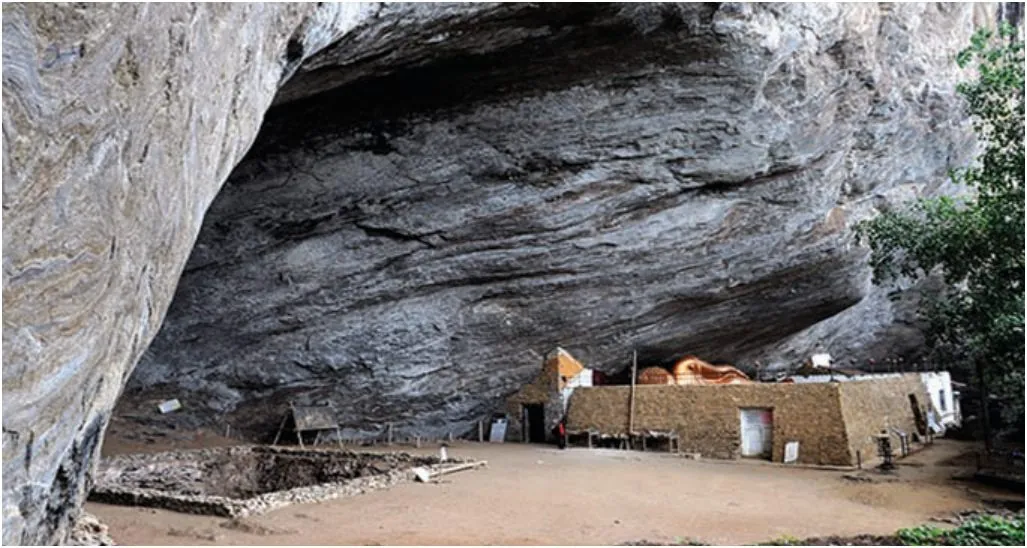 Fig 2.1 – Pahiyangala cave (Bulathsinhala, Kaluthara District), a habitation of pre-historic people 38 000 years ago
Dates of key sites
| Site | Age (years) |
|---|---|
| Pahiyangala | 38 000 |
| Kuruwita Batadombalena | 28 000 |
| Kitulgala Belilena | 15 000 |
| Bellanbendipelessa | 12 000 |
| Attanagoda Alulena | 10 350 |
| Maniyamgala | 7 900 |
| Sigiriya Pothana | 5 800 |
| Sigiriya Aligala | 5 500 |
| Udamalala | 5 330 |
| Mathota | 3 800 |
Key features of settlements
- People lived where food resources, water and suitable stones were plentiful (rain forests, dry-zone forests, coastal lagoons, hill-country grasslands).
- Open areas in the dry season; natural caves in the rainy season.
Life style
- Nomadic hunter-gatherers in groups of 15–25 (maximum about 50). A family of five needed about 50 m².
- Church Hill, Bandarawela: 150 m², about 25 people. Bellanbendipelessa: 120 m², 30 skeletons.
- Walked about 7 km a day searching for food.
- Burial: buried relatives in the cave where they lived; sometimes dug a pit with a horn or stick. 12 skeletons at Kithulgala Belilena, 30 at Bellanbendipelessa, 9 at Pahiyangala.
- Skeletons were sometimes exhumed, painted with red ochre and reburied.
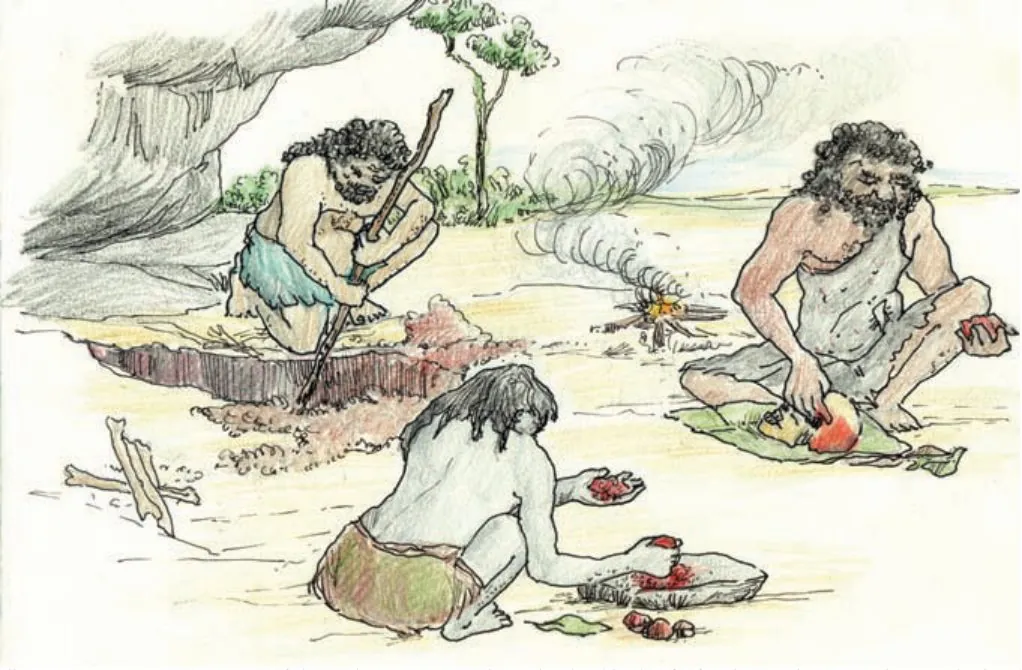 Illustration 2.2 – Burial in the cave where the person had lived; later the skeleton was coloured with red ochre
Food
- Hunted: gaur, buffalo, black bear, wild boar, deer, spotted deer, porcupine, hedgehog, hare, stag, giant squirrel, mongoose, wild fowl, monkey, civet cat, iguana; fresh-water fish and small fish in natural pools.
- Plant food (starch): wild breadfruit, wild plantains, yams (Gonala, Katuala), kithul seeds, Dothalu kernel. Belilena has wild breadfruit seeds baked and eaten 12 500 years ago.
- Ate tree-snails and lagoon oysters; salt was brought from the coast to inland people (Kithulgala Belilena oysters mixed with salt).
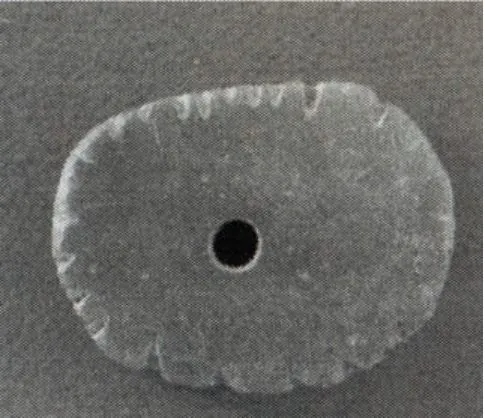 Fig 2.3 – A bead made from an animal bone, found in a pre-historic habitation
Technology
- Geometric micro stone tools – not more than 4.5 cm (1–7 cm in the textbook definition); made mostly of quartz and some 'Kahanda' stone (alabaster, "Bim Weeduru"); attached to a wooden or bone handle (hafting) for cutting, scratching, chopping and digging. Hammers and grinding stones were made of granite.
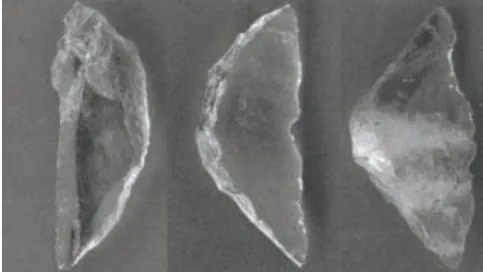 Fig 2.2 – Geometric stone tools of the Middle Stone Age made of alabaster
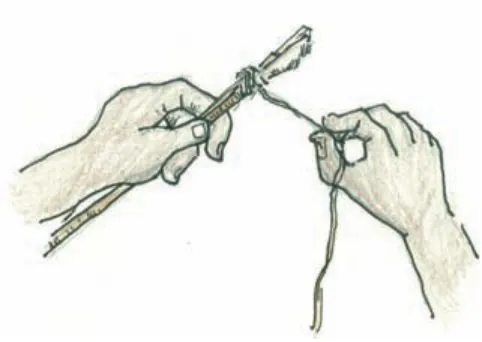 Illustration 2.1 – How micro stone tools were attached to wood or bone
Physical body
- Adult male ≈ 174 cm, female ≈ 166 cm; big teeth; wide nose and chin; brain 1600 cm³ (male), 920 cm³ (female); lifespan about 35–40 years.
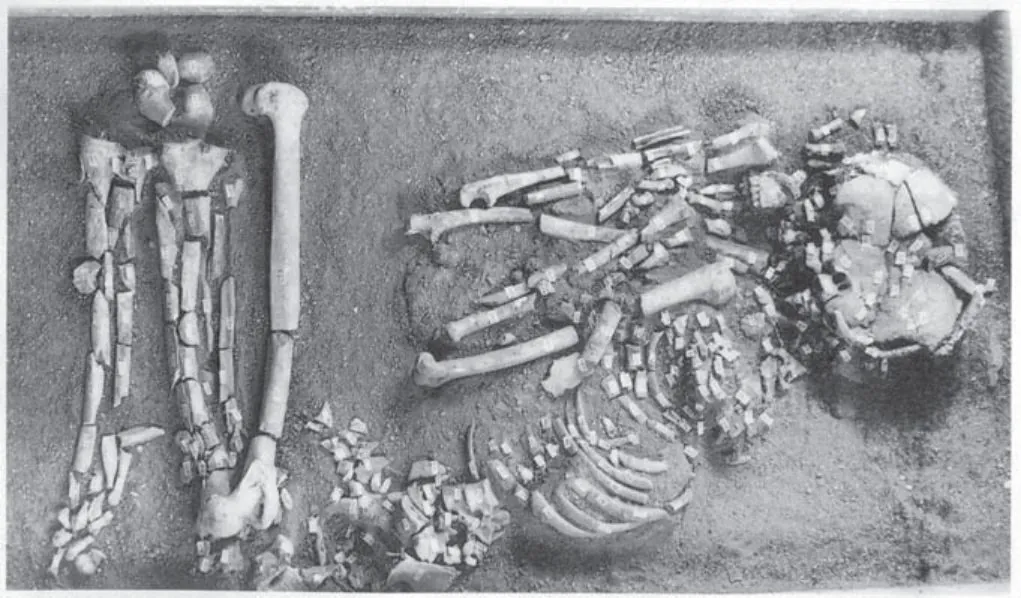 Fig 2.4 – Pre-historic human skeleton from Pothana cave, near Sigiriya
Rituals
- Rawana Ella cave (near Badulla): skull with rough edges rubbed and one side painted with red ochre – clear evidence of ritual.
- Pahiyangala: skeleton parts painted with red ochre. Batadomba Lena (Kuruwita): skeleton curled and buried.
- Researchers note cultural and biological similarities with the aboriginal (Vedda) community.
2.2 Settlements in the Proto-historic Era
- The period between the end of the pre-historic and the start of the historic era; technologically a transition.
- Features: burnt pots, methodical burial, iron instead of stone, permanent settlements, agriculture. By its end, stone tools were completely given up. Also called the proto-historic Iron Age / early Iron Age.
- Cause of change: climatic change in South Asia between 7000–4500 B.C. (Holocene) – the Ice Age ended, temperatures rose, an environment suited for agriculture was created, population grew.
- Oldest proof: 2400 B.C.; clearer evidence from the north-east of Sabaragamuwa and south-west of Uva (Rathnapura – Ranchamadama, Udaranchamadama; Beragala, Haldummulla).
Map 2.2 – Distribution of megalithic burial grounds of the proto-historic era — practise it on the interactive map.
Megalithic burials
- Cist burials: square stone-splinter chambers covered with huge slabs; pots with human remains inside.
- Excavated sites: Ibbankatuwa (near Dambulla), Galsohonkanaththa (Yapahuwa), Yatigalpoththa (near Galewela) – dated 750–450 B.C.
- Urn burials: remains in a clay urn.
- Beragala and Haldummulla (Uva): clay pots placed in a boat-shaped raw-clay tub; skeletons were cremated in the tub, which baked it hard.
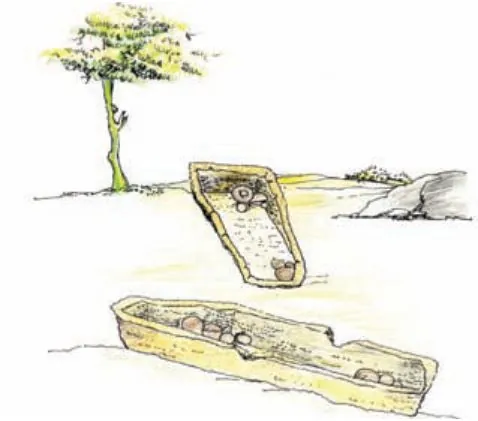 Illustration 2.3 – Clay urns with cremated remains placed in boat-shaped burial tubs
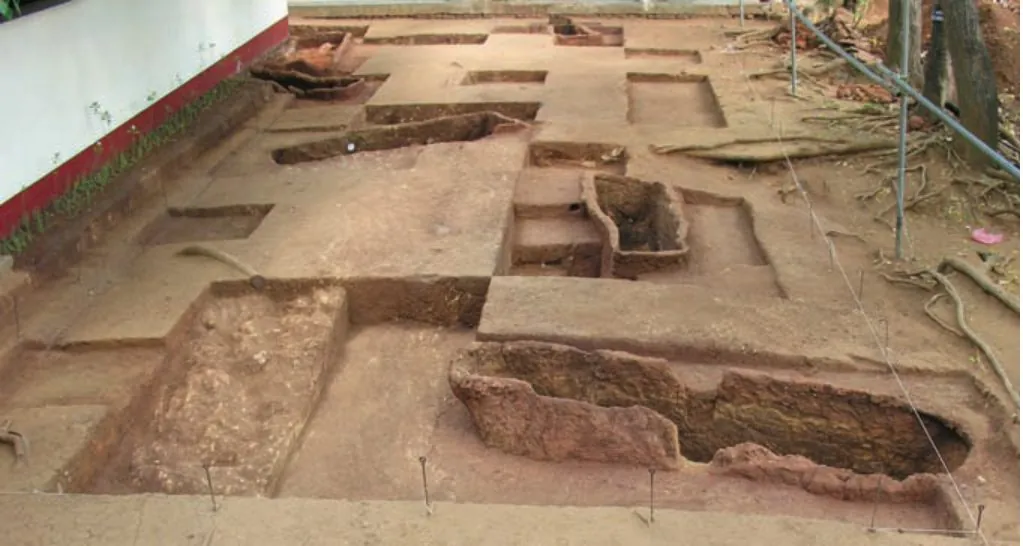 Fig 2.5 – A pre-historic cemetery found at Kolambageara Ranchamadama school (Rathnapura), excavated 2007, used about 3350 years ago
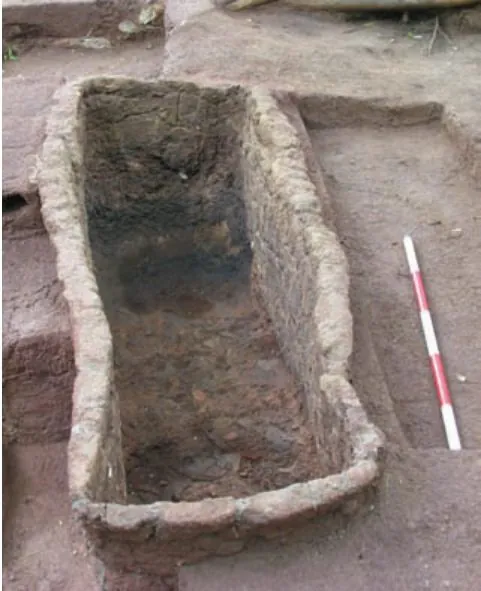 Fig 2.6 – Clay tub burial at the proto-historic burial ground, Ranchamadama
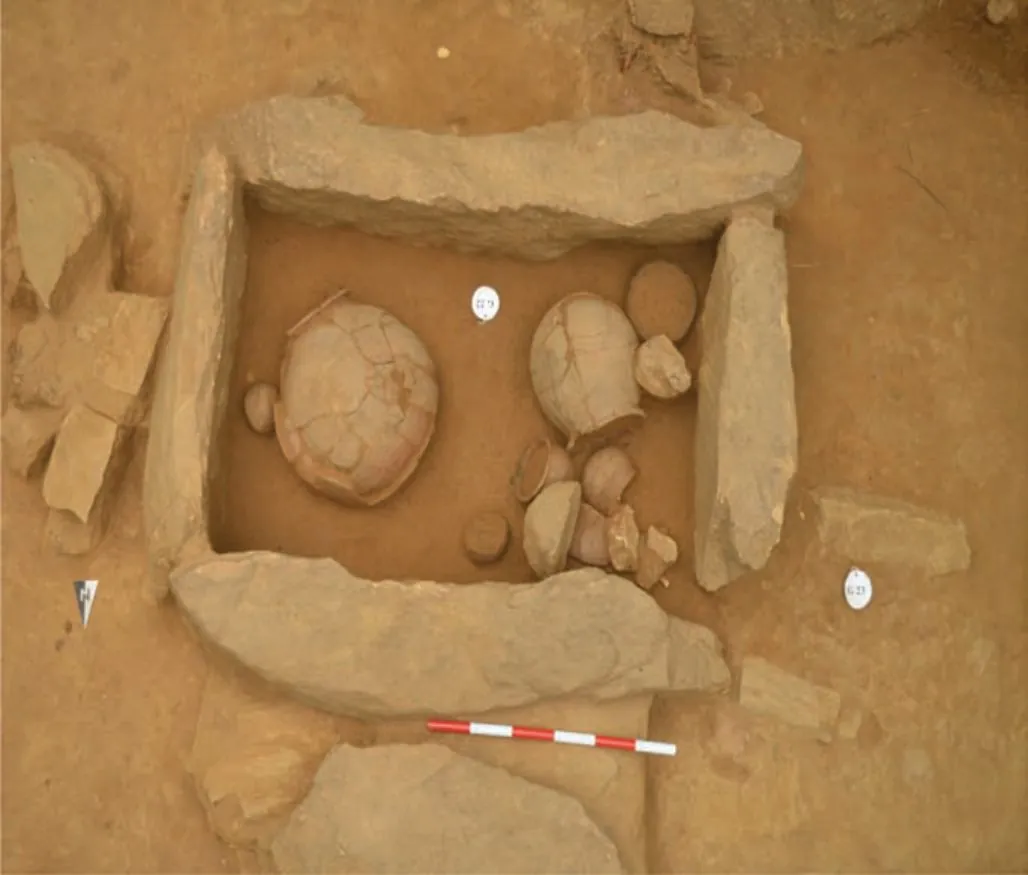 Fig 2.7 – A stone casket (cist) tomb from the Ibbankatuwa burial ground near Dambulla
Nature of settlements – sedentism
- Udaranchamadama house (Rathnapura, found 2009): rectangular, 10.20 m × 6.80 m, wattle-and-daub walls, roof thatched with Iluk; about 3000 years old (c. 1129 B.C.).
- Finds: painted potsherds (white base with red lines drawn symmetrically – made on a potter's wheel); stone and iron tools; bones of deer, cattle, wild boar, giant squirrel (agriculture plus hunting); clay beads; an iron kohl stick; ochre stones; two grinding stones – women cared about beautifying the body.
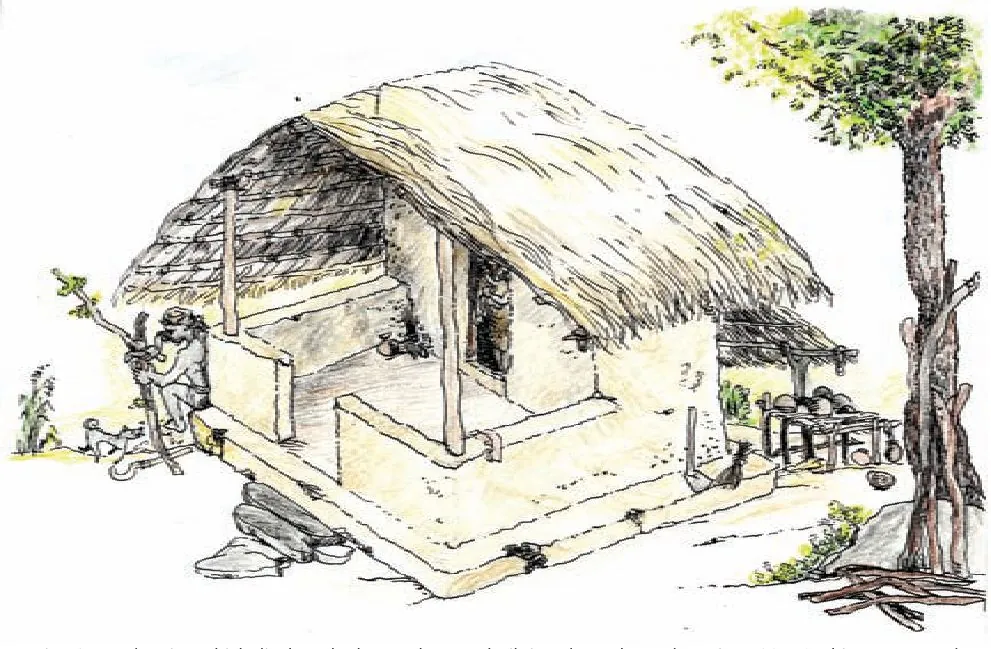 Illustration 2.4 – Reconstruction of the Udaranchamadama house (1129 B.C.)
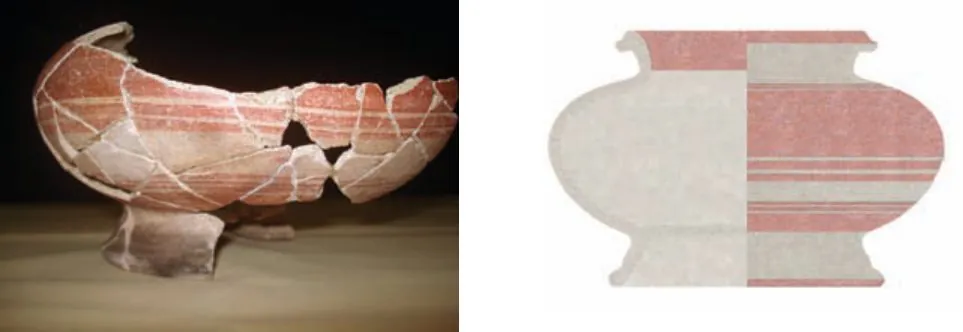 Fig 2.7(b) – The painted clay pot from Udaranchamadama (1129 B.C.) and its early shape
Technology
- Iron made clearing forests, digging and ploughing easy. Pottery, bead making and house-building (foundations, levelled walls) show advanced technology.
2.3 Settlements in the Early Historic Era (450 B.C. – 300 A.D.)
- Thousands of small village tanks show where settlements spread; most settlements stood close to a tank, at one end of the bund.
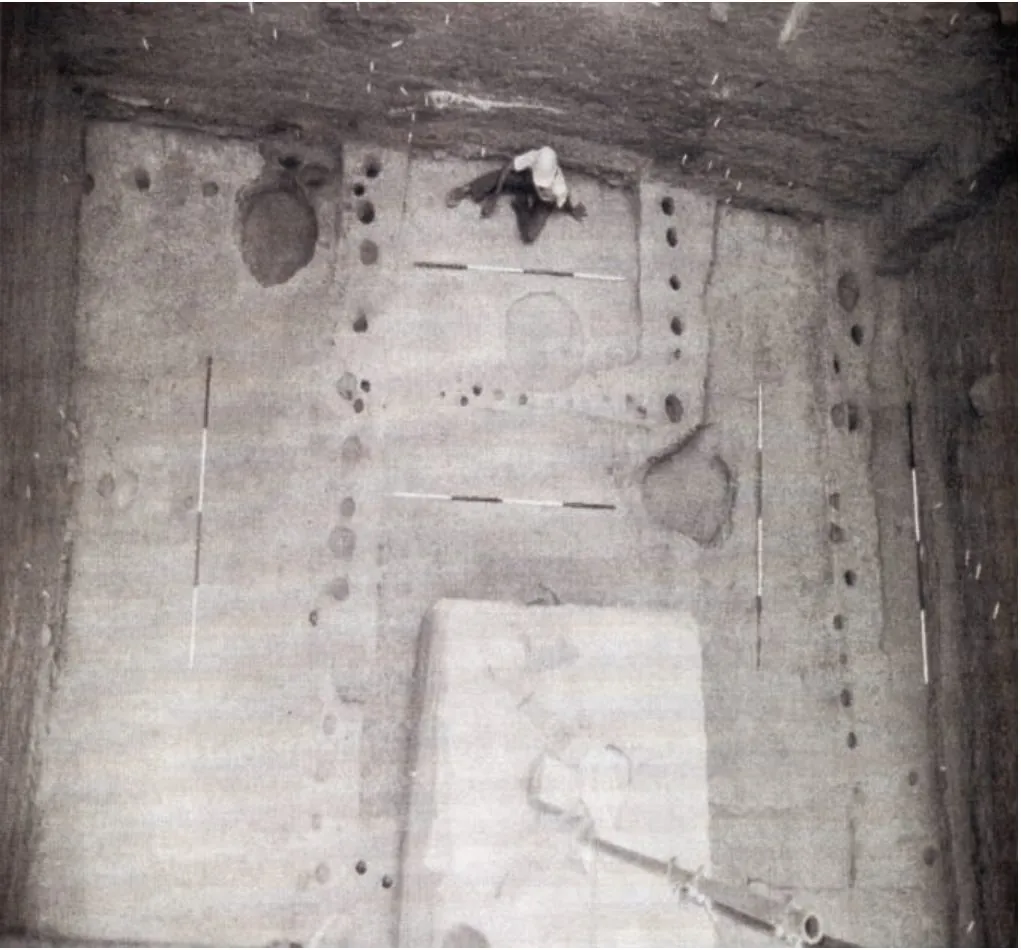 Fig 2.8 – Pits for pillars of a rectangular hut foundation, old interior city of Anuradhapura
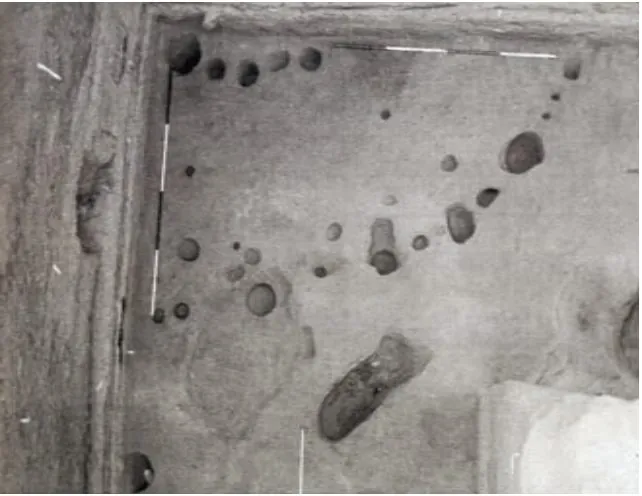 Fig 2.9 – Pits for posts of a circular hut foundation, Anuradhapura
Factors that influenced the spread of settlements
- Geophysical background: rainfall, soil, geo-diversity, natural resources, drainage.
- Settlements spread in the dry zone (rainfall 1000–1250 mm; arid zone below 1000 mm) because of the fertile red-brown soil.
- Water came from monsoon rain (major) and rivers. River use needed anicuts and canals (labour, time, technology), so tanks were built.
- Early settlements grew outside river valleys because there was no technology to control annual floods. Flood control by anicuts began about the end of the 1st century B.C. or 1st century A.D. – e.g. King Ilanaga (33–43 A.D.) built an anicut across the Kirindi river (Tissamaharama tank). 'Avarana' (= anicut) appears in Brahmi inscriptions at Ganekanda and Gallena temples, Kurunegala district.
Map 2.3 – Distribution of the oldest village tanks and early inscriptions in Sri Lanka — practise it on the interactive map. Map 2.4 – Ancient settlements around Kirindi Oya, Tissamaharama (900–500 B.C. away from the river; later nearer after flood control) — practise it on the interactive map. Map learning – Map 2.4: the earliest settlements (900–500 B.C.) lay away from the Kirindi Oya valley; settlements moved close to the river only after flood control. Mark: Kirindi Oya, Tissamaharama, Yodakandiya tank, Tissa wewa.
Structure and nature of settlements
- Vapigama = village developed around a tank (Mahawamsa: Sumana-, Vihara-, Hundiri-, Kadaha-vapigama). Villages were separated by jungle belts.
| Village type | Who lived there |
|---|---|
| Kasikaragama | Farmers |
| Manikaragama | Gem-mining people |
| Gopalagama | Cowherds |
| Kewattagama | Fishermen |
| Kumbhakaragama | Potters |
| Vadtakigama | Carpenters |
| Pattanagama | Near harbours |
| Niyamgam | Trading villages |
| Olagam | Around tanks deserted by people |
- Sizes: small village ≤ 0.15 ha; medium ≈ 2 ha; large urban > 2 ha. Normally 5–6 families; large villages ~30 families. By the 6th century A.D. about 35 000 people in Magama city and adjacent settlements.
- Parikkita gam = fenced (protected) village; Aparikkita gam = unprotected. Pura = large urban settlement; Pura Kamatha (250 B.C.) = chief architect; Vijayabahu I's Panakaduwa plate calls Anuradhapura Nurupura. Nakara/Nagara = settlement between village and city.
Administration
- Gahapathi = chief householder. Gamika / Gramika = village chief. Dasa Gam Eththan = panel of ten chief householders for ten villages (Kaludiya Pokuna inscription, Dambulla).
- Houses: wattle-and-daub with leaf thatch, round or square/rectangular; Walagampaththuwa (Tissamaharama) house of the 3rd century A.D.
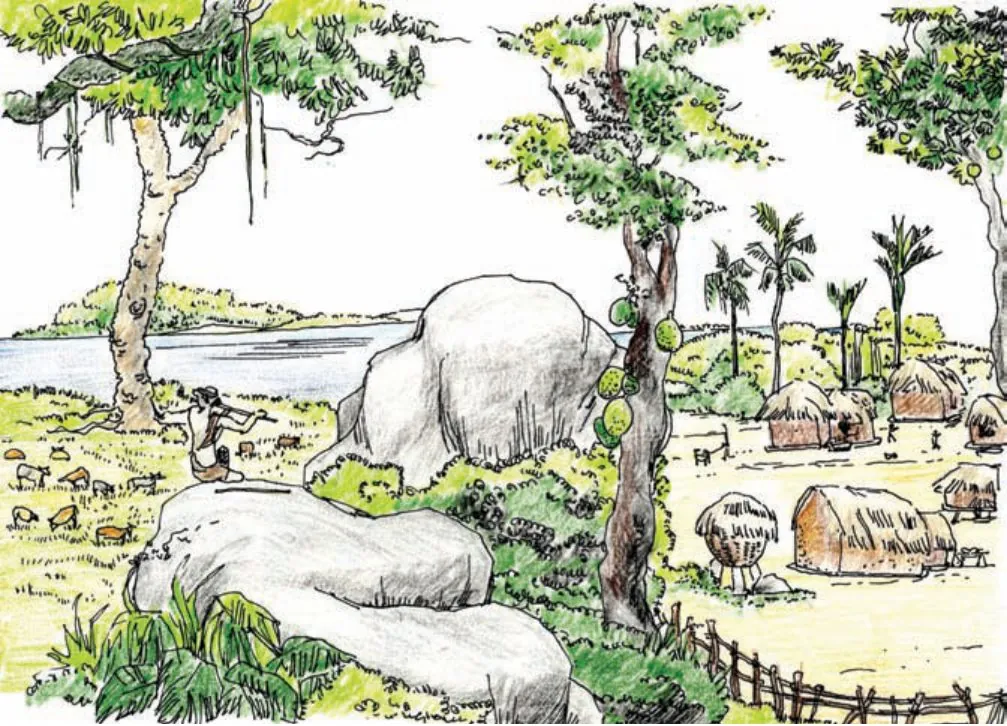 Illustration 2.5 – Imaginary drawing of an ancient Sri Lankan village
Means of subsistence
- Chena cultivation: Kurakkan, Meneri, sesame, Thanahal – drought-tolerant crops with short roots.
- Growing population → more food → more water → village tanks.
Comparison – three eras
| Feature | Pre-historic | Proto-historic | Early historic |
|---|---|---|---|
| Time | 125 000 yrs ago – 1800 B.C. | c. 2400 B.C. onwards | 450 B.C. – 300 A.D. |
| Livelihood | Hunting, gathering | Beginnings of farming + hunting | Chena + tank-based farming |
| Technology | Micro stone tools | Iron, pottery | Tanks, anicuts, iron |
| Settlement | Caves, open camps (nomadic) | Permanent houses (Udaranchamadama) | Tank-based villages, nagara, pura |
| Death rites | Burial in caves; red ochre | Megalithic cists, urn burials | – |
Important facts
- First settlements were founded by Archaic Homo Sapiens hundreds of thousands of years ago; they showed no racial identity.
- Stone tool technology = pre-historic era (also called the Middle ("Mediaeval") Stone Age).
- Farming was established by about 2400 B.C.
- Pots, burial grounds and iron began in the proto-historic era – basics of Sri Lankan civilization; people began village life.
- Mahawamsa describes a well-organised society when Prince Vijaya arrived.
Timeline – Unit 2
| Date | Event |
|---|---|
| 125 000 yrs ago | Stone Age at Pathirajawela |
| 80 000 yrs ago | Bundala, Wellegangoda |
| 38 000 yrs ago | Pahiyangala |
| 12 500 yrs ago | Baked wild breadfruit at Belilena |
| 7000–4500 B.C. | Holocene climate change |
| 2400 B.C. | Earliest proto-historic evidence |
| 1800 B.C. | End of Stone Age (minimum) |
| 1129 B.C. | Udaranchamadama house and painted pot |
| 750–450 B.C. | Ibbankatuwa and other megalithic burials |
| 450 B.C. – 300 A.D. | Early historic era |
| 33–43 A.D. | Ilanaga – Kirindi Oya anicut |
| 3rd century A.D. | Walagampaththuwa house |
| 6th century A.D. | ~35 000 people at Magama |
Exam focus
- Mark pre-historic sites and megalithic burials on a map (Activities 1 and 2).
- Differences between the three eras (Activity 3).
- Why early settlements were in the dry zone but outside river valleys.
- Properties of micro stone tools; village types; Gahapathi–Gamika–Dasa Gam Eththan.
Glossary: Iranamadu deposit; Archaic Homo Sapiens; micro stone tools; overflowing valley (floodplain, delta); sedentism; vapigama.