
Textbook: Unit 3 (printed pp. 31–43)
0. Introduction
- Sources say Sri Lanka was ruled by many kings and a few queens. Prince Vijaya (from India, 6th century B.C.) is named as the first king.
- Archaeology shows settlements before Vijaya. Burial grounds at Beragala and Haldummulla show an agricultural society developing from 2400 B.C. – such a society needed some ruling system.
- A ruler needs the consent of the people. In the East the word "Mahasammatha" (general will) was used for such a king. Rulers without people's consent could not rule long.
- State = the territory ruled by a king/queen on the people's will (Jana sammathaya) + officials + people.
3.1 The Pre-State Era
- No single definite ruler. Wealthy chieftains dominated small areas. Early inscriptions call them Parumaka (from Sanskrit Pramukha = "main").
- Their power came from their wealth.
- Kothgalakanda inscription (Kandalama, near Dambulla, 250 B.C.) – a Parumaka offered a cave to monks and is called "Thota Bojaka" = one who enjoys/collects taxes of the port (theertha). "Anubhava kirima" = collecting taxes and enjoying property – only a ruler could do this.
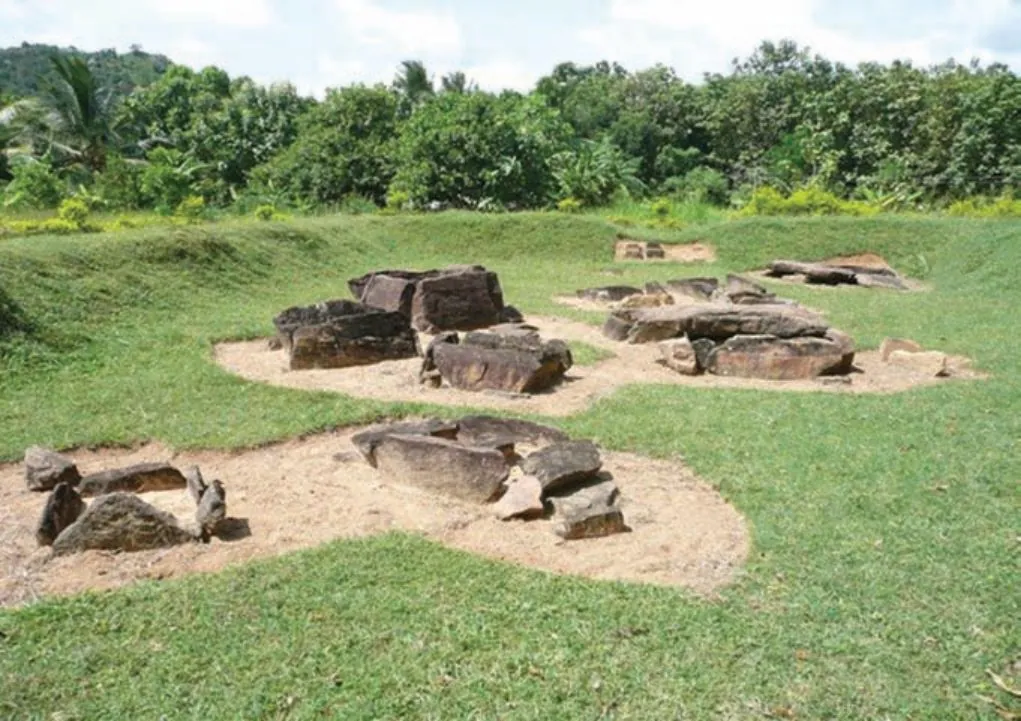 Fig 3.1 – Ibbankatuwa burial ground, Dambulla (700–450 B.C.), used by influential people such as Parumakas
Village society (the base of political power)
| Term | Meaning | Key evidence |
|---|---|---|
| Kula | Family | Villages had about 1–30 families (settled by 900 B.C.) |
| Gruhapathi / Gahapathi | Householder; chief of a family | Periyapuliyankulama inscription – householder in the metal trade offered a cave to monks |
| Gamika (Gramika) | Chief of a village, chosen from among householders (probably the wealthiest); represented the village in marriages, exchange of goods, disputes; managed the tank and water distribution | Jathaka Atthakatha story of a poor man borrowing a bag of paddy from the Gamika; Samanthapasadika (Buddhaghosha) says Gamika was appointed from householders |
| Parumaka | Most powerful Gamika representing all villages of a tank system | Hundreds of Parumakas named in inscriptions; women = Parumakalu |
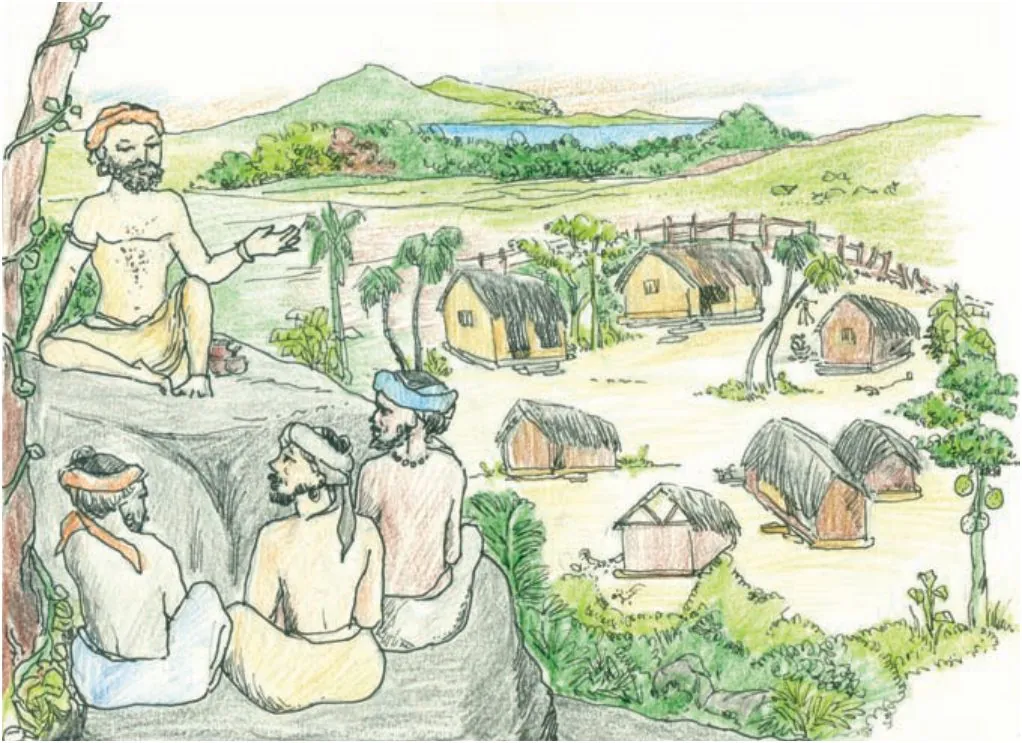 Illustration 3.1 – A village Gamika, one of the householders, who coordinated activities between villages
- Villages were separated by belts of jungle, so people thought of "our village", "neighbouring village" and "outside villages".
- Evidence of cooperating Gamikas: a cave at Korawakgala, Sithulpawwa (Hambantota) was cleaned and offered by Gamika Siva, Gamika Sumana and Gamika Thidana – chiefs of neighbouring villages.
Origin of Parumakas – the tank system (Ellangawa)
- About 900 B.C. settlements spread in the dry zone around small rain-fed tanks (enough for 10–15 families for a short time).
- Dry seasons and population growth required more water and more cultivated land.
- Villagers connected neighbouring tanks by canals – a "prolapsed tank" system (Ellangawa).
- Two purposes: (i) conserve water by carrying overflow from an upper tank to a lower one; (ii) keep the land beside the canal damp for cultivation.
- Connecting tanks needed decisions by many villages → the most powerful Gamika became Parumaka for the whole system.
- Result: decentralized ruling – political power started as a divided system.
Map 3.1 – A prolapsed tank system (Ellangawa) in Hambantota District; canals connect rain-fed tanks — practise it on the interactive map.
Illustration 3.2 – Parumakas, the chiefs of the Gamikas, who had the right to collect taxes
Fig 3.2 – Bead necklace from Ibbankatuwa (700–450 B.C.); some beads imported – shows growing luxury of Parumakas
- Some Parumakas called themselves king: Pochani Raja ("king of the eastern region", Embul Ambe, Matale) and Duhathara Raja (Yatahalena, Kegalle). "King" = one who makes others happy.
Growth of Kingship (centralization)
- Centralizing power = uniting the country under one person; this creates the concept of the state.
- Pandukabhaya – first king according to the Mahawamsa: defeated his uncles (provincial rulers), made Anuradhapura the capital, and marked village boundaries in his 10th regnal year.
- Reasons for centralization (by Devanampiyatissa's time): growth of Indian Ocean trade; Sri Lanka's position mid-way on the east–west sea route; gems, elephants and spices attracted traders; an independent country was needed to join this trade.
- Devanampiyatissa: second coronation with the five royal insignia (Pancha Kakudha Bhanda) sent by Emperor Ashoka; used the title Devanampiya; invited Kshatriyas of Kataragama and Chandanagama to the Sri Maha Bodhi planting and planted saplings in many places (building goodwill with regional rulers); Mihindu Thero brought Buddhism.
- Dutugemunu united the Parumakas. Generals Velusumana, Pussadeva, Theraputtabhaya, Nandimitra appear as Parumaka in inscriptions (Sithulpawwa caves) and later as Senapathi Parumaka. Other Parumakas became treasurers, cashiers, storekeepers.
- Bhatikabhaya – a Sri Lankan envoy visited Rome and returned with glass beads; he performed a great pooja at Ruwanweliseya (statue there).
- Vasabha – completed centralization; ruled as one unit; inscriptions across the country; administrative districts (asthana) with ministers. The Vallipuram golden plate records Jaffna (then Nagadeepa / Nakadiva) ruled by minister Srishigiri.
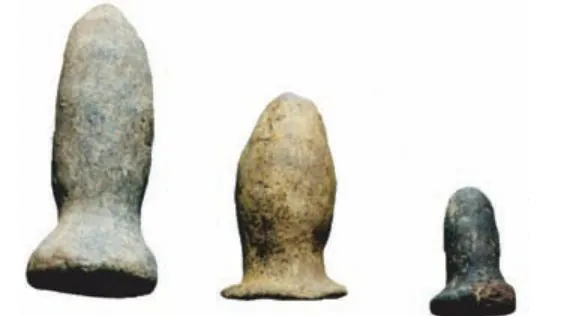 Fig 3.3 – Clay stamps used by officials, found at the old urban hall of Tissamaharama
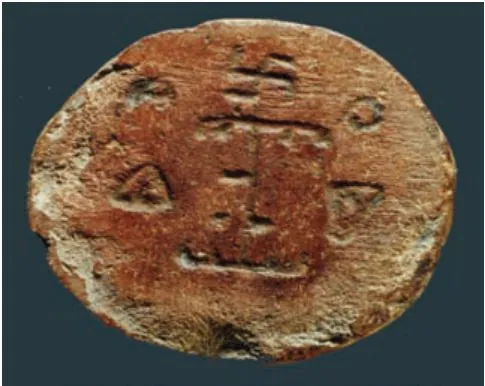 Fig 3.4 – Clay stamp from ancient Magama (Tissamaharama) with symbols used by Ruhuna royals
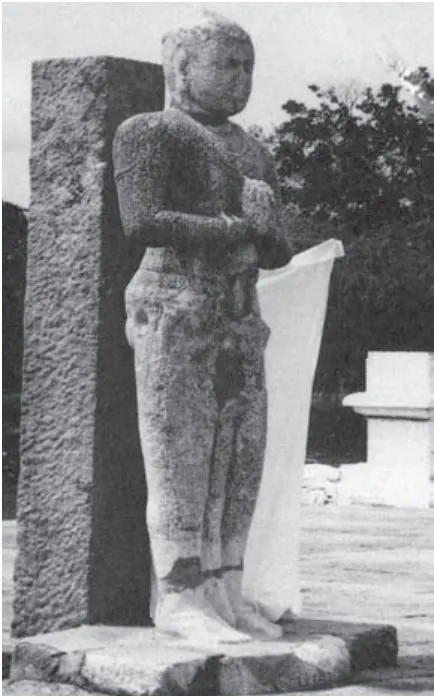 Fig 3.5 – Statue of King Bhatikabhaya at Ruwanweliseya
3.2 The Concept of State
Duties of rulers: develop the economy, protect the people, enhance spirituality. Even foreign-origin kings (Elara, Nissankamalla) won trust by doing so.
Concepts of kingship
| Concept | Example |
|---|---|
| Devathwa (god) | Kutakanna Abhaya called himself Nareshvara (Dambulla rock inscription); Mahasen worshipped as God of Minneriya (dry-zone devalas) |
| Kuwera | Kashyapa I – Alakapaya Maha Raja; Alakamanda = Kuwera's city (said to be a huge rock = Sigiriya) |
| Parvatharaja (mountain-king) | Asian rulers' tradition |
| Bodhisattva | King shown as responsible, just ruler; people trust and respect him |
| Chakravarthi (Sakvithi) – world ruler | Used in 8th–9th centuries A.D.; Nissankamalla: "Kalinga Chakravarthi Swaminwahanse" |
| Veerathwa (heroism) | – |
- All concepts showed the king's superiority and made people expect exemplary conduct.
Inheritance of kingship
- Brother to brother (the eldest younger brother), or father to son (most frequent); the eldest son of the king or of the chief consort was heir.
- Examples: Devanampiyatissa → brothers; Dutugemunu → brother Saddhatissa; Kavantissa → Dutugemunu; Vasabha → Vankanasikatissa.
- Conflict when rules were broken: Kashyapa seized the throne from his father Dhatusena – Mugalan (son of the chief consort) was the rightful heir; Kashyapa's mother was a second queen.
- Otherwise the throne went to the consort's brother or the king's sister's son.
Statecraft
- Many Parumakas united; the king became Mahaparumaka / Mapurumuka; later Maha Raja.
- Officials (from the earliest inscriptions)
| Official | Ancient title |
|---|---|
| King | Maha Raja (Mapurumuka) |
| Chief minister | Maha Emathi (Mahamatha) |
| Ministers | Emathiwaru (Ametha) |
| Commanders | Senapathi |
| Treasurer | Bhandagarika (Badagarika) |
| In charge of dining hall | Bathagu |
| Customs officer | Kothuruge na |
| City administrator | Nagaragutika |
| City architect | Nagara Wudika |
| In charge of horses | Asa Adeka |
| In charge of elephants | Hathi Adeka |
| In charge of drama | Nata Adeka |
| Mint officer | Rupa Adeka |
| In charge of trade | Pana Adeka |
| Archivist | Kanapedika |
3.3 Great Kings
Dutugemunu
- Saved Mahatota (Mathota) international harbour, rich from Indian Ocean trade, from Elara who had seized Anuradhapura; planned with father Kavantissa.
- Led the first organized fighting movement in the country's history; declared he fought for Buddhism, not for royal comforts.
- After victory ordered respect for Elara's tomb (statesmanship).
- Combined the Parumakas → became Maha Raja.
- During the construction of Ruwanweli Stupa: alms halls (Dansal) at four gates, payment to all workers.
Vasabha (first ruler of the Lambakarna dynasty)
- Inscriptions across the country; divided country into provinces; systematic tax collection.
- Built 16 large tanks (first large-scale tank builder) to meet grain demand of South India (famine in the Krishna valley).
- Restored temples and stupas; supported monks.
Vijayabahu I
- Drove out the Cholas after a long period of Chola rule; childhood name Keerthi, grew up in Ruhuna; protected by security officer Sithnarubima Budhal Na (Panakaduwa copper plate).
- Protected territorial integrity; restored temples neglected under the Cholas.
- Moved the capital from Anuradhapura to Polonnaruwa: trade had moved from West India to East India; Trincomalee harbour (Gokanna Thiththa) faced the east and could be controlled from Polonnaruwa.
Important Facts
- Political power in Sri Lanka began decentralized: Gamika (village) → Parumaka (tank system) → Maha Raja (state).
- Dutugemunu began centralization; Vasabha (Lambakarna) completed it.
- State = king + officials + laws + institutions that apply them.
- Pancha Kakudha Bhanda: Walvidunava (fan), Mirivedi Sangala (slippers), Magul Kaduva (sword), Sesatha (parasol), Nalal Patiya (forehead band). Devanampiyatissa's second coronation with items from Ashoka.
- Devanampiya = "dear to the gods" (Ashoka's title, used by Tissa).
- Alakamandava – abode of Kuwera in the island Uthurukuru.
Timeline
| Date | Event |
|---|---|
| 2400 B.C. | Agricultural society in Beragala/Haldummulla |
| c. 900 B.C. | Rural settlements in dry zone around small tanks |
| 700–450 B.C. | Ibbankatuwa burial ground in use |
| 250 B.C. | Kothgalakanda (Kandalama) inscription – "Thota Bojaka" |
| 3rd c. B.C. | Pandukabhaya; Devanampiyatissa (Ashoka's contemporary) |
| 2nd c. B.C. | Dutugemunu unites the country |
| 1st c. A.D. | Vasabha; centralization completed |
| 11th c. A.D. | Vijayabahu I defeats the Cholas; Polonnaruwa capital |
Exam focus
- Define Gahapathi, Gamika, Parumaka, Raja.
- Explain how tank systems led to Parumakas.
- Why centralization (Indian Ocean trade)?
- Contributions of Dutugemunu, Vasabha, Vijayabahu I.
- Concepts of kingship with examples.
Map / place notes
Dambulla (Ibbankatuwa, Kandalama), Sithulpawwa & Hambantota, Tissamaharama (Magama), Matale (Embul Ambe), Kegalle (Yatahalena), Jaffna (Nagadeepa), Mathota, Polonnaruwa, Trincomalee.