
Textbook: Unit 4 (printed pp. 44–62)
0. Introduction
Most sources describe rulers, officials and religious leaders (a minority). To understand the past we must also learn about the general public who formed the majority.
4.1 The Nature of Ruling
- Three institutions of government: legislature (makes laws), executive (implements laws – government officers) and judiciary (gives justice). In ancient Sri Lanka the executive also acted as the legislature (monarchy) and a judiciary existed.
- Ekthensamiya (9th c. A.D. inscriptions) = Eka asthana (king's court) + Samya (agreement) → "agreement of the king's court". The Buddhannehela inscription: land offered with the agreement of the king's court and the king's decree (Wath himiyan wadala).
- Sabhawa (council) – the judiciary. Officers named Udaya (Meningamuwa) and Sena (Nikawella) came on behalf of the council to give the land Kerelegama to Mahindarama nunnery (they marked boundaries and recorded conditions).
- Mahale / Maha Lekhaka = general secretary who documented government affairs. Medirigiriya inscription: Mahale Kashyapa gave land to Padhanaghara Eth Wehera by decree of King Sena II.
- Provincial administration (Anuradhapura could not control distant areas): Vallipuram golden plate (Vasabha) – minister Rishigiri/Srishigiri governed Nagadeepa and built Piyangukatissa temple.
- Dasagam Ettan – local councils (9th c.) representing ten villages; Kaludiya Pokuna inscription (Matale) – they solve problems over alms to the temple.
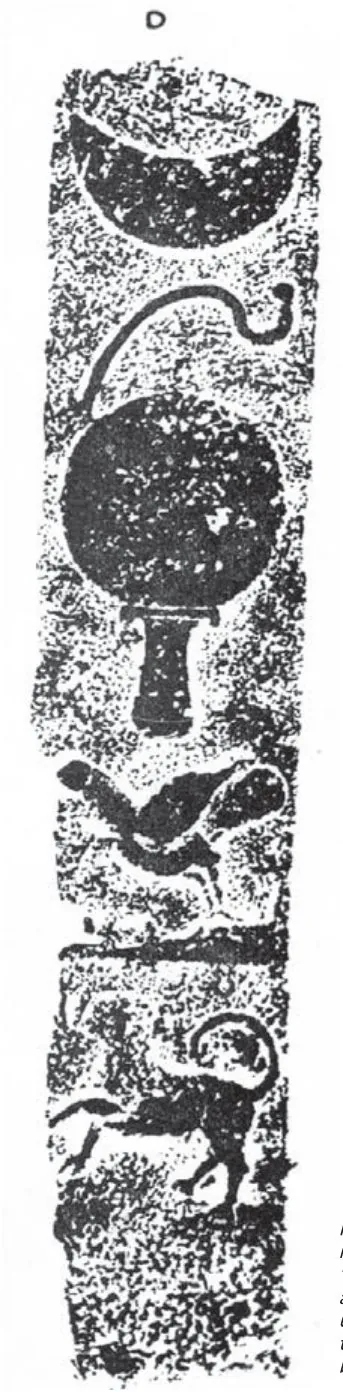 Fig 4.1 – Symbols on a 9th-century inscription: fan (sceptre of royalty), creeper/swan (purity of the grant), crescent (lasting as long as sun and moon), dog and crow (those who violate it will be reborn as such)
Welfare: hospitals
| Ruler / term | Contribution |
|---|---|
| Vejjasala | hospital; Veja = doctor (2nd c. B.C. inscriptions) |
| Buddhadasa (340–368 A.D.) | built many hospitals |
| Upatissa I (365–406 A.D.) | maternity hospitals (Paswantinama Sala, in inscriptions Thimbirige) |
| Kashyapa IV (898–914 A.D.) | special hospital for an epidemic fever (Upasaggaroganasa) |
| Mahinda V (982–1029 A.D.) | supplied all needs of hospitals in provinces |
| Pandukabhaya | Sottisala – places of Brahmin rites and maternity halls |
Foreign relations
| Ruler / date | Relation |
|---|---|
| Gajabahu I (114–136 A.D.) | Visited the Chera state for the opening of a Pattini Devala |
| Bhatikabhaya (23 B.C.–7 A.D.) | Envoys to Romanuka Desha (Rome) for glass pebbles for Ruwanweli pooja |
| 8th–9th c. A.D., esp. Aggabodhi VI | Close ties with China; 20 missions |
| Vijayabahu I (1070–1110) | Married Thilokasundari of Kalinga; his sister Mitta married a Pandya prince; used the Veleikkara mercenary army to guard the Temple of the Tooth |
| 9th c. Al-Balasuri | "Ruby Island" king exchanged gifts with Islamic ruler |
- Policy: peaceful coexistence, welfare, territorial integrity, flexible foreign policy.
4.2 Economy
4.2.1 Agriculture and animal husbandry
Chena (Hena) cultivation – the older form. Ancient names: Sehen (Buthsarana), Sen (Ummagga Jathaka), Pitibim (inscriptions).
- Method: choose jungle plot → cut small trees/undergrowth, dry and burn; big trees left; owner shouts to chase animals away.
- Nawa Deli Hena – newly burnt, fertile chena (also nine crops sprouting: kurakkan, kollu, undu, mun, iringu, thanahal, asamodagam, amu...). Kanaththa – re-opened old chena (Anuradhapura).
- A chena was used once or twice and abandoned → forest regrew (no environmental harm).
- Crops: undu, ma, mun, kurakkan, iringu, sesame, amu, mustard (aba), dill (duru), thanahal; vegetables (karabatu, thiththabatu, vambatu, alu puhul, wattakka). Separate plots: al vee, yams, sugar cane (uk), cotton (kapu). Jaggery and cloth were produced locally; sugar was not imported until the 16th c.
- Dandu Weta – fence; Pela – hut at the top of a tall tree for watching at night.
- Taxes: Kethi Ada and Ketu Kanaba Aya – abolished by Nissankamalla (1187–1196).
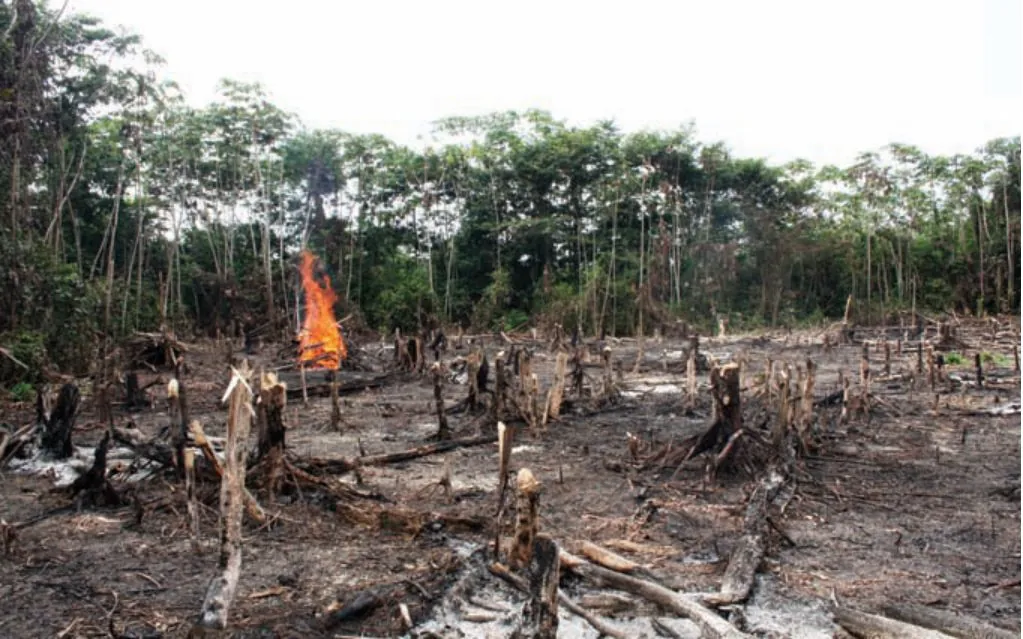 Fig 4.2 – A newly prepared chena (Nawadeli Hena)
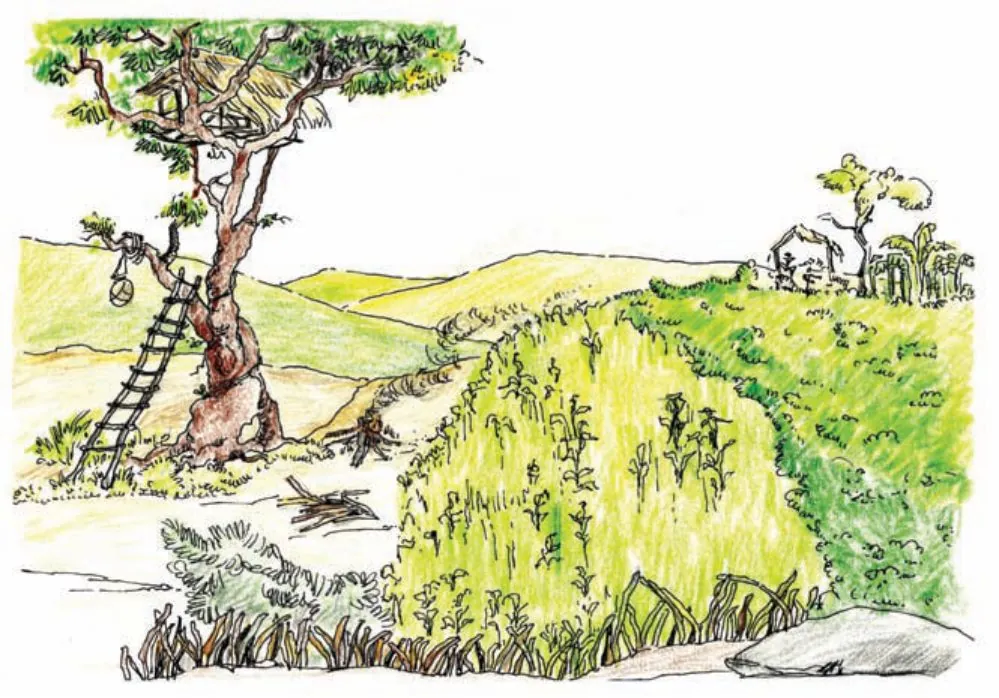 Illustration 4.1 – A chena with its watch hut and fence
Paddy cultivation – to feed a growing population.
- Kumbura (small field) and Ketha (from Sanskrit Kshetra, large fields). Irrigated by rain stored in tanks and carried by canals.
- Seasons (Kanna): Maha Kanna, Yala Kanna, and Meda Kanna (between them, depending on water).
- Two water strategies: storing rain (tanks) and diverting rivers with barriers (anicuts). Parakramabahu I (1153–1186): "Not a single drop of water that falls from the sky should be sent to the sea without being used."
Animal husbandry – cattle rearing (Gopalagam), milk (mee kiri), ghee (githel), butter (wendaru). Kirigeri – dairy cattle (Kashyapa IV inscription, Colombo Museum). Rock carving of a woman milking a cow at Nagapabba, Sigiriya (Mahameru). Chickens and goats were reared; the Medirigiriya hospital inscription says only the flesh of naturally dead chicken/goats was to be used for patients.
4.2.2 Industries
| Craftsman | Ancient word | Notes |
|---|---|---|
| Blacksmith | Kabara (Kammara) | made keththa (knife), udella (mammoty), nagula (plough); Muthugalla inscription (Polonnaruwa) – Majjima |
| Copper/tin worker | Thabakara | |
| Goldsmith | Thuladhara / Swarnakara | Mandagala inscription (Hambantota) – Thuladara Sumana |
| Gem worker | Manikara | beads and badges at Anuradhapura, Magama |
| Ivory carver | Dantika (Datika) | Vegiriya – Datika Sumana |
| Potter | Kumbhakara | inscriptions > 2250 years old |
| Weaver / spinner | Thathvaya (Thanthu Vaya) | Veherakema inscription (Hambantota) |
4.2.3 Trade
- Few cities (Pura): Anuradhapura and Magama. Kalasumana bazaar at Anuradhapura's southern gate. Tamarind trader "Abala Wapara" (Sigiriya inscription, 2250 years old).
- Guilds: Poogaya / Niyamasthana; traders: Wanija / Vapara (from Vyaparika). Traders offered caves (Mandagala – Sumana; Weherakema – weavers' guild).
- Market laws of Udaya IV (946–954) – Soraborawewa inscription, Hopitigama market: tax charged only on carts entering the market, betel sold in a covered hut, no trade on poya days (fine: oil for lamps of Mahiyangana temple).
- South Indian guilds (11th–13th c.): Nanadesi, Valanjiyar, Ayinurruvar; metal stamp of Nanadesi found in Hambantota; "Kajoba Maha Pugiya" at Bowaththegala.
- Harbours: Mathota (west), Gokanna/Trincomalee (east), Jambukolapattana (north; Sri Maha Bodhi brought) and Lankapattana (east; Tooth Relic brought by Prince Dantha and Princess Hemamala).
Map 4.1 – Old commercial cities and ports — practise it on the interactive map.
Professions
- Acharya (teachers): Hasthi Acharya, Ashwa Acharya, Dunu Acharya (elephant, horse, archery).
- Veja (doctors); Maha Vedana (chief doctor/surgeon) in 9th c.
- Vohara (legal experts; from Vyavahara).
- Artists: dancer Tissa (Medagama inscription, 2200 years old; his wife was a Parumaka), painters Chithakara / Lapana (Nattukanda – Lapana Tissa), poet (Kavi) Sanjaya (his son).
4.3 Culture
4.3.1 Religion
- Buddhism from Arahath Mahinda (3rd c. B.C.). Over 1600 caves with drip ledges and Brahmi inscriptions (language: Sinhala Prakrit) at Mihintale, Ritigala, Vessagiriya, Sigiriya.
- Mihintale inscription: "Parumaka Gutha Putha Parumaka Sumanaha lene agatha anagatha chathudisha sagasa" = cave offered to the Sangha of the four directions by Chief Sumana, son of Chief Gutha.
- Pannasala – clay/wattle huts → modern word Pansala. Padhanaghara – meditation buildings (two platforms with moat and bridge).
- Anthewasika / Saddi Viharika – pupils; Thera – senior monks; Bhanakas – memorized Tripitaka (Deega Bhanaka, Sanyuktha Bhanaka…) until it was written down in Valagamba's time.
- Vas Visima (rainy-season retreat) and Katina Uthsava (robe offering): Helambagala and Kothalakimbiyawa inscriptions (2200 years old).
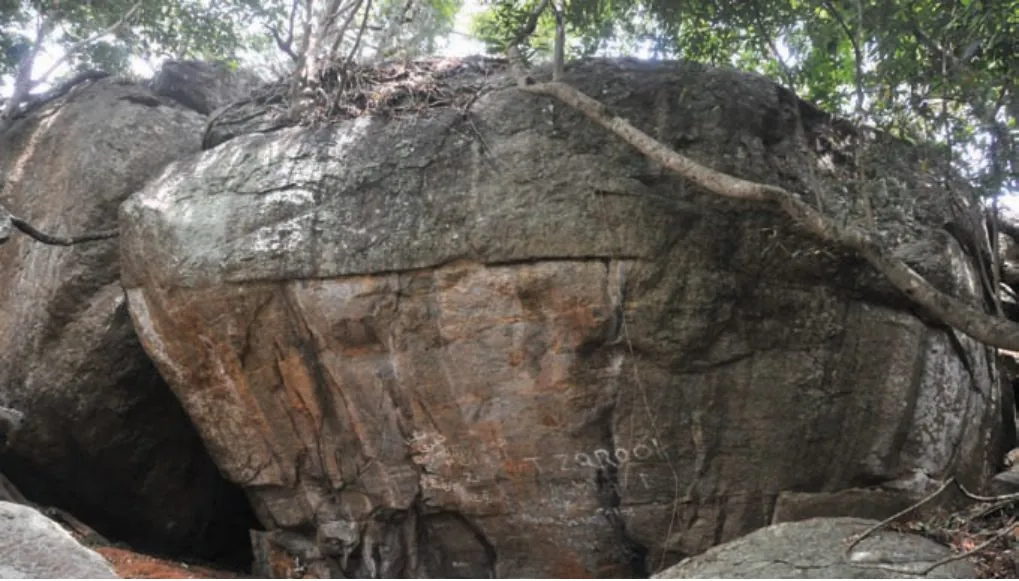 Fig 4.3 – A cave with a drip ledge and Brahmi inscription (e.g., Mihintale), offered to monks
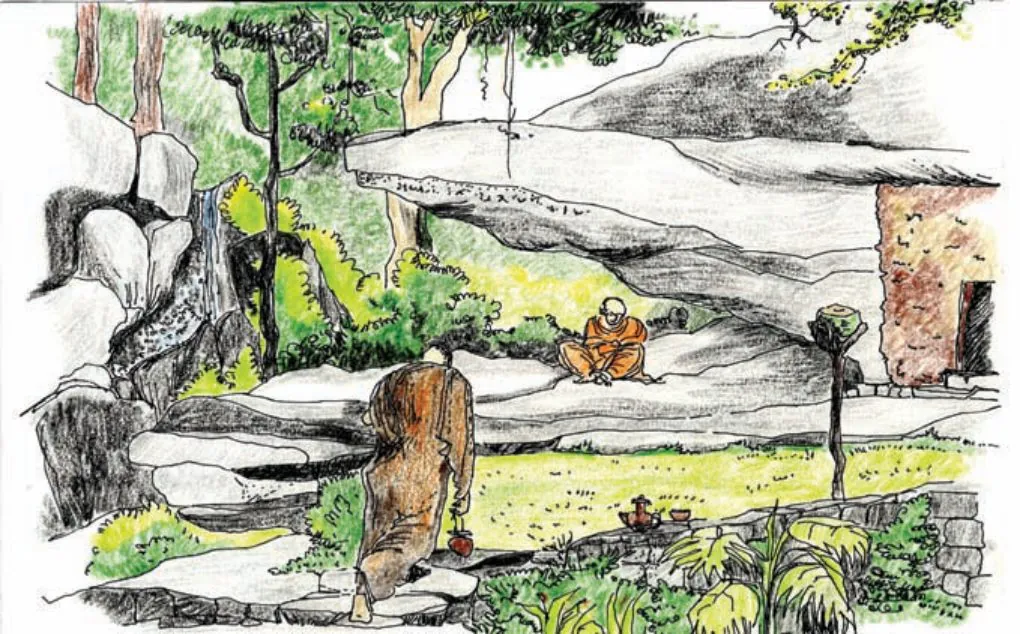 Illustration 4.2 – Monks living in cave monasteries offered by devotees
4.3.2 Other religions
- Hinduism: Brahmins near Anuradhapura; Sottisala and Sivikasala; Tamil traders (Dameda = Dravida); temples Thirukketheeswaram (Mathota) and Koneswaram (Trincomalee); Shiva Devala at Polonnaruwa.
- Christianity (Nestorian): cross on a stone slab in Anuradhapura (scholars: made after Portuguese arrival); Cosmas Indicopleustes (6th c.) mentions Persian traders at Anuradhapura.
- Islam: after 9th c.; oldest Arabic geography (c. 845 A.D.) names the island Sarandib; Ajayib al-Hind (Ibn Shahriyar, 953 A.D.); Abbasid commerce (751–1258) spread Muslim trade; Cufic tombstone letters; merchant Sulaiman visited Sri Pada in 850 A.D. Sri Pada venerated by four religions.
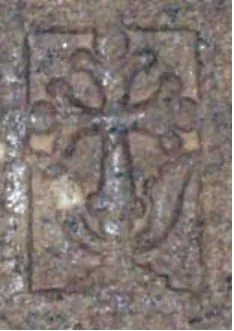 Fig 4.4 – Cross on a stone post at Anuradhapura (after Portuguese arrival)
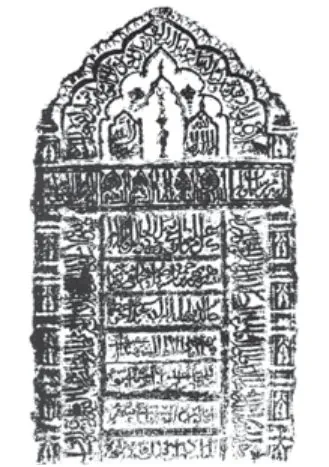 Fig 4.5 – Arab tombstone with Cufic script
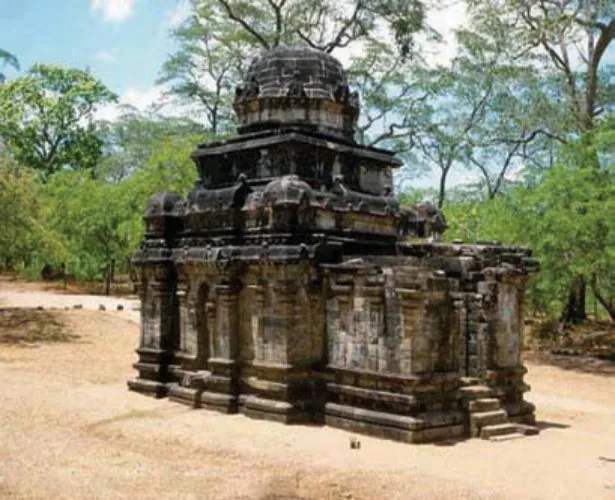 Fig 4.6 – Ancient Shiva Devala, Polonnaruwa
4.3.3 Education
- Knowledge passed on orally and by practice; skilled technology in clay-tub burials (4400 years ago) shows organized learning.
- Temples and monasteries became centres of education (Sinhala, Pali, Sanskrit, Prakrit, Buddhist doctrine).
- Lokopakaraya poem: an uneducated person, however young, wise and handsome, is like a flower without fragrance.
4.3.4 Literature and appreciation
- Pali: Dipavamsa, Abhidhammapadipika, Sarattha-dipani. Sanskrit: Janakiharanaya, Balavabodhaya, Anuruddhashatakaya. Sinhala: Siyabaslakara, Sasadavata, Muvadevdavata.
- Kirinda rock poem (2000 years old) – free verse praising the Buddha; "Naka Uvaraja entered the order".
- Sigiri graffiti – about 600 poems on the Mirror Wall; themes of impermanence and nature; Abhayagiri 9th-c. inscription compares life to a vara flower caught in a wildfire.
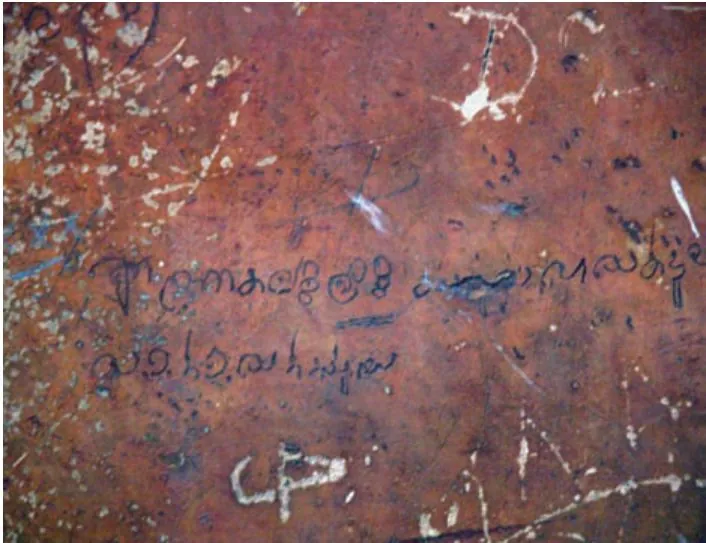 Fig 4.7 – Sigiriya graffiti (8th–9th c.): "Konanathal I wrote this"
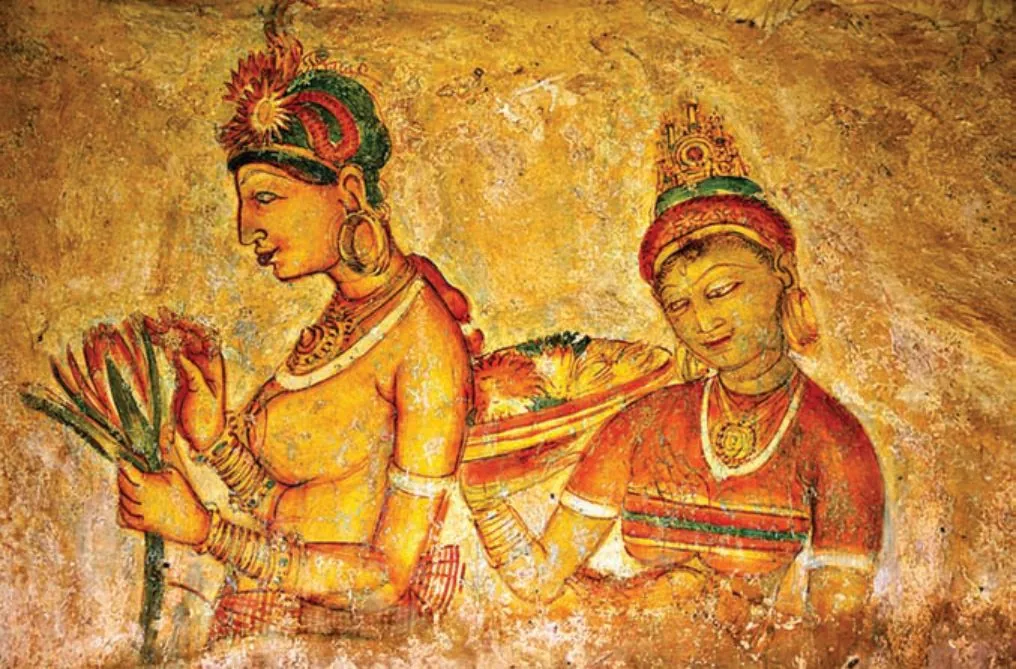 Fig 4.8 – Sigiri nymphs (5th c.), thought to represent Meghalatha (thunder cloud) and Vijjulatha (lightning)
4.3.5 Ethnic co-existence
- Traders: South Indians, Ionians (Yona), Cambodians (Kamboja) from Afghanistan, Jawakans from the Malay peninsula.
- Abhayagiri inscription (1st c. A.D.) names a Tamil monk; an Ampara inscription mentions a Tamil man married to a Sinhala woman; Tamil street excavated in Anuradhapura.
- Demala Adhikari – court officer for Tamil welfare (9th c.; Kashyapa IV inscription, Colombo Museum – Pandiradh).
- Agampadi Senawa / Veleikkara – South Indian (Kerala) mercenaries first used by Ilanaga (33–43 A.D.) and Abhayanaga (231–240 A.D.).
- Nanadesin merchants (Hambantota stamp; customs barrier in Queen Lilavati's inscription, Anuradhapura).
Important Facts
- Government = executive + legislature + judiciary; king's court decided by discussion.
- Agriculture and animal husbandry were the main livelihoods; chena was older than paddy.
- Over 1600 caves offered to monks; Sigiriya Mirror Wall ~600 poems.
- Coexistence was a hallmark; Sri Pada honoured by four religions.
- Glossary: Padhanaghara, Poogaya, Cufic.
Exam focus
- Explain Ekthensamiya, Sabhawa, Dasagam Ettan.
- Chena vs paddy cultivation; seasons; taxes abolished by Nissankamalla.
- Occupations and ancient words (Kabara, Kumbhakara, Thuladhara…).
- Religions and evidence of each.
- Ethnic coexistence examples.