
Textbook: Unit 5 (printed pp. 63–76)
0. Introduction
- Science = understanding and interpreting the elements that affect nature; technology = putting those fundamentals into practical use.
- Ancient Sri Lankans applied scientific ideas in daily life (tombs, irrigation, buildings).
5.1 Early Stages of Scientific Ideas
- 28 000 years ago: symmetrical stone tools made of alabaster ("ground-glass" stone) using pressure flaking – shows organized technology.
- Applied science began in the pre-historic age and matured in the proto-historic age.
Clay-tub burials
- Boat- or basin-shaped tombs of raw clay, walls built perpendicular to the ground (as at the Udaranchamadama house) – reduces pressure on walls; masons today use a plumb line.
- Raw clay burnt well when the skeleton was cremated; in a tomb of 1350 B.C. a clay tube was fixed to supply air (oxygen). Modern science only proposed oxygen's role in burning in the 18th century – Sri Lankans knew it 3250 years ago.
House-building
- Pre-historic: stone parapet at Kithulgala Belilena (probably held a leaf cover); no clear huts at Bellanbendipelessa.
- Proto-historic: Udaranchamadama house (1129 B.C., Rathnapura) – floor of stones and clay, wattle-and-daub wall, internal dividing wall, wooden doorframe post-holes.
Pottery
- Sakaporuwa (potter's wheel).
- Black-and-red ware (Kalarakta Varna Meti Bandun): pot filled with chaff and fired upside down → red outside, black inside (little oxygen inside). This technology disappeared after 300 B.C.
- Painted pot at Udaranchamadama: white background with orange/red lines using natural red-brown stone pigment; clay was settled in water to get fine particles (like modern porcelain-making).
5.2 Maturity of Scientific Usage
5.2.1 Water management
Large tanks (Anuradhapura era): Kawdulla (2537 ha), Minneriya (2550 ha), Hurulu Wewa (2125 ha), Kala Wewa (2125 ha), Padaviya (2357 ha). Aims: farming, flood control, urban water.
| Component | Function |
|---|---|
| Tank bund | Built on natural rock between two hills; layers of clay, soil, gravel and clay (kirimeti) beaten down (examined at Sigiri Mahawewa; elephants beat the foundation of Ruwanweliseya). Yodha Wewa bund ≈ 7 miles long, 44 ft high |
| Ralapanawa | Stones on the inner slope to protect the bund from wave erosion |
| Sorowwa (sluice) | Stone structure through the bund, releasing water; Wessagiriya inscription of Mahinda IV – Mohol Naga |
| Diyaketa Pahana | Vertical stone slab moved to release water (four riyan high at Wessagiriya) |
| Bisokotuwa | Square stone chamber (valve pit) reducing pressure; several in high bunds |
| Mud sluice | At bottom of bund, to remove silt after the rains |
| Canals | Adika – officer who built canals (2nd c. B.C.); Elahera canal (from Amban Ganga, feeding Minneriya, Giritale, Kawudulla, Kantale); Minipe canal from Mahaweli to Polonnaruwa |
| Ponds | Kuttam Pokuna, Kumara Pokuna, Eth Pokuna, Nelum Pokuna |
| Uraketa Lin | Wells lined with large clay pots for drinking water (dry zone with brackish water) |
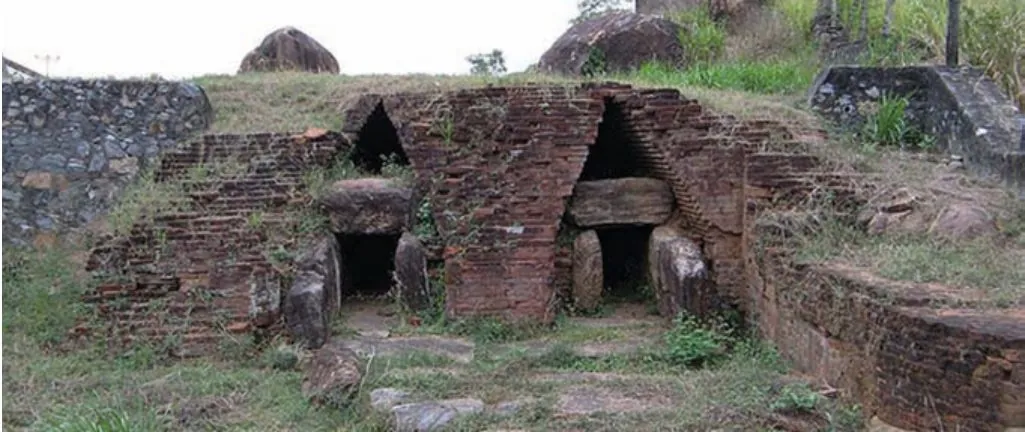 Fig 5.1 – Ruins of an ancient sluice found at the site recommended by foreign engineers for the present Maduru Oya dam sluice
Sigiriya water gardens
- Four fountains on each side of the western entrance avenues. Water from about 600 ft height flows through gutters; pressure sends water up; hole diameter changes the height (small hole → higher jet).
- Spiral gutters make water flow a long way on a low slope so silt settles; stone splinters remove silt. Fountains still work in heavy rain.
- The western part = Kshudra Jala Udyanaya ("minor water park"), symmetrical plan.
5.2.2 Architecture
- Stupas, bodhigharas, image houses, monasteries, alms halls, palaces, hospitals; Jetavanaramaya, Abhayagiriya, Ruwanweliseya, multi-storey Lovamahapaya.
- Vajra chumbata (lightning conductor) at top of Ruwanweliseya (vajra = lightning; chumbaka = magnet/attract) – no record of lightning damage.
- Foundation of Ruwanweliseya (Mahawamsa): pit 7 cubits deep → limestone broken and trampled by leather-shod elephants → Wendaru clay → stones and gravel → crystal layer → Navaneetha clay → iron net with wood-apple gum → Ransiriyal stones soaked in sesame oil – similar to modern concrete technology.
- Fig 5.2 – granite bridge over Malwathu Oya at Anuradhapura (road network).
- Sigiriya (5th c. A.D.) – rock 200 m high; summit ≈ 3 ha; eastern and western precincts 40 ha and 90 ha; city wall ≈ 10 km; moats 8 km; mathematical plan.
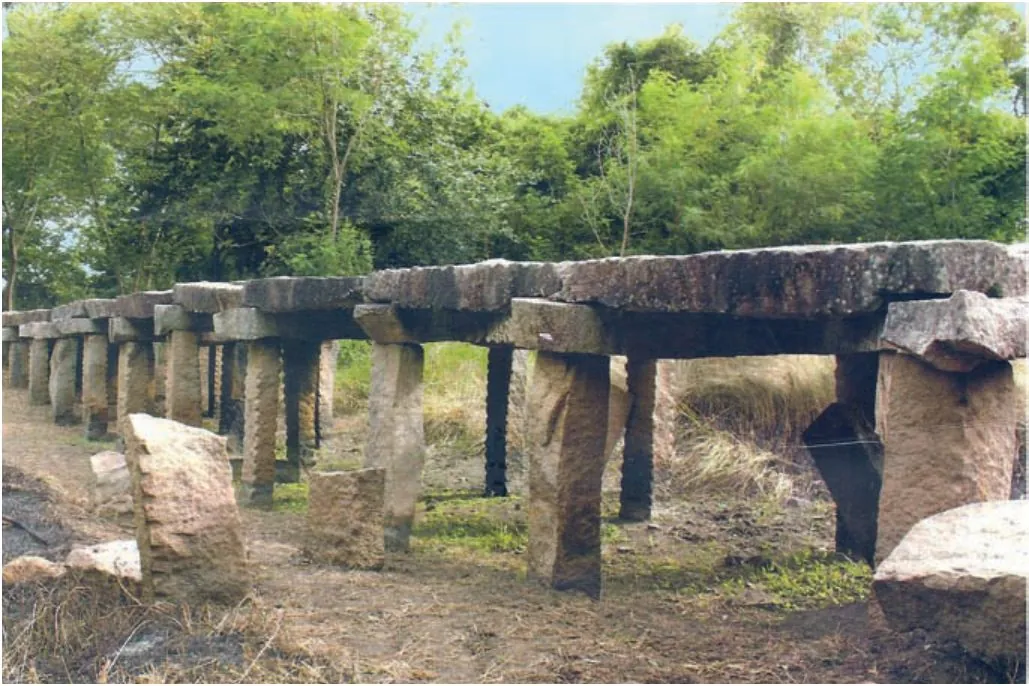 Fig 5.2 – Ruins of a granite bridge over the Malwathu Oya, Anuradhapura
Hygiene and medicine
- Pandukabhaya built maternity houses (Sivikasala); Dutugemunu built 18 hospitals.
- Alahana Pirivena, Polonnaruwa – hospital excavated 1982 (147.5 ft × 109.2 ft; used from Parakramabahu I); surgical instruments (scissors) found; medicinal texts, herbal gardens, land for physicians.
- Lavatories with deep pits; drains and pumps in bathing ponds at Polonnaruwa; seven lavatories at Alahana.
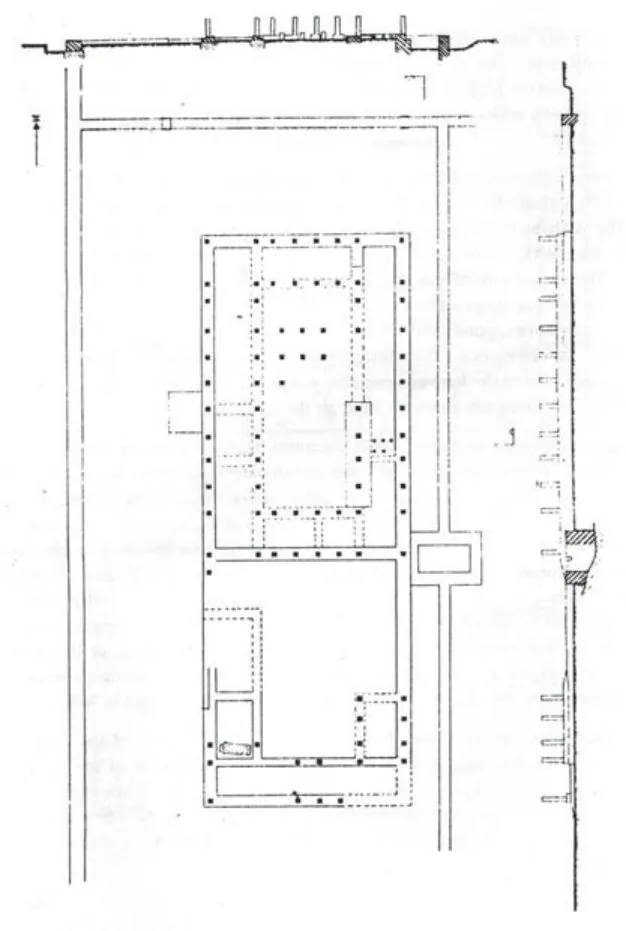 Plan 5.1 – Foundation plan of the Alahana Pirivena hospital, Polonnaruwa
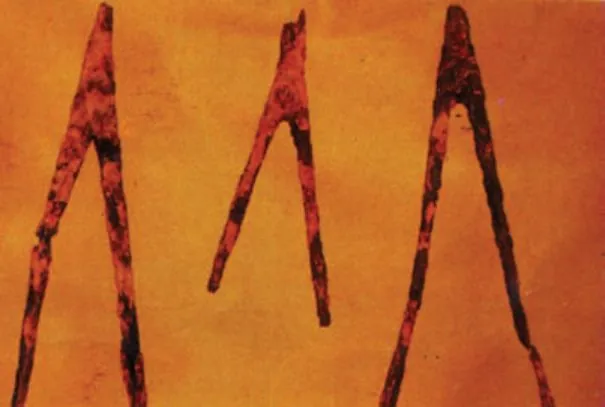 Fig 5.4 – Metal scissors from the Alahana Pirivena hospital ruins
Iron smelting
- Iron slag from the Beragala tomb (2400 B.C.).
- Samanala Wewa (Balangoda, Sabaragamuwa) – 3rd c. B.C.; wind-driven furnaces on mountain-face; burn ≈ 12 hours using evening monsoon wind; ore limonite and hematite; charcoal from Maran (Yakada Maran) trees.
- Dehigaha Elakanda, Alakolawewa (near Sigiriya) – 180 B.C.–200 A.D.; bellows used.
- Iron melts at 1538 °C.
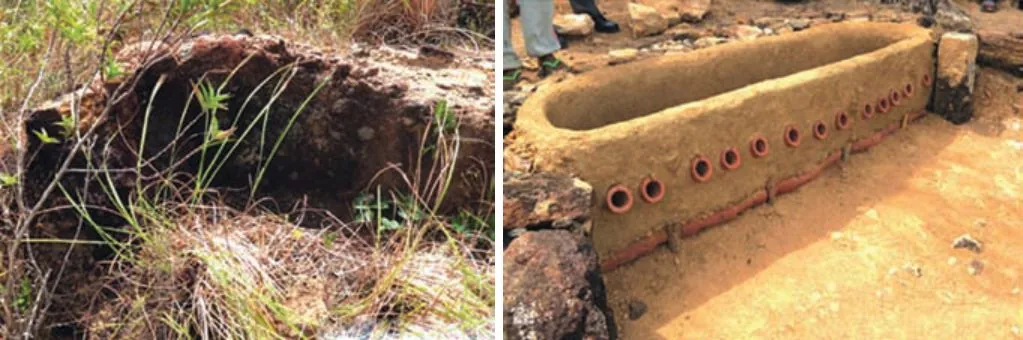 Fig 5.3 – A ruined ancient iron furnace at Samanala Wewa (left) and a reconstruction (right)
Minor industries: gold pendant from Jetavanaramaya (as small as a paddy seed, 21 flower carvings); coloured roof tiles at Abhayagiri; forged weapons.
5.2.3 Local rituals
- Yathukarma; Kempahan (lamp offerings with mee or sesame oil against crop pests or cattle disease).
- Galpaya (Rathnapura, 2009) – ruins of a devala (3rd c. A.D.): inverted pots in a 6 ft circle, ox jaw, post-holes of hut – site of Kirimadu Shantikarmaya (cattle protection ritual; still done in Uva and Sabaragamuwa; Kirimadu Yagaya to god Mangara). Pallebadde Galpaya devala (2nd c. A.D.) buried 4 ft deep.
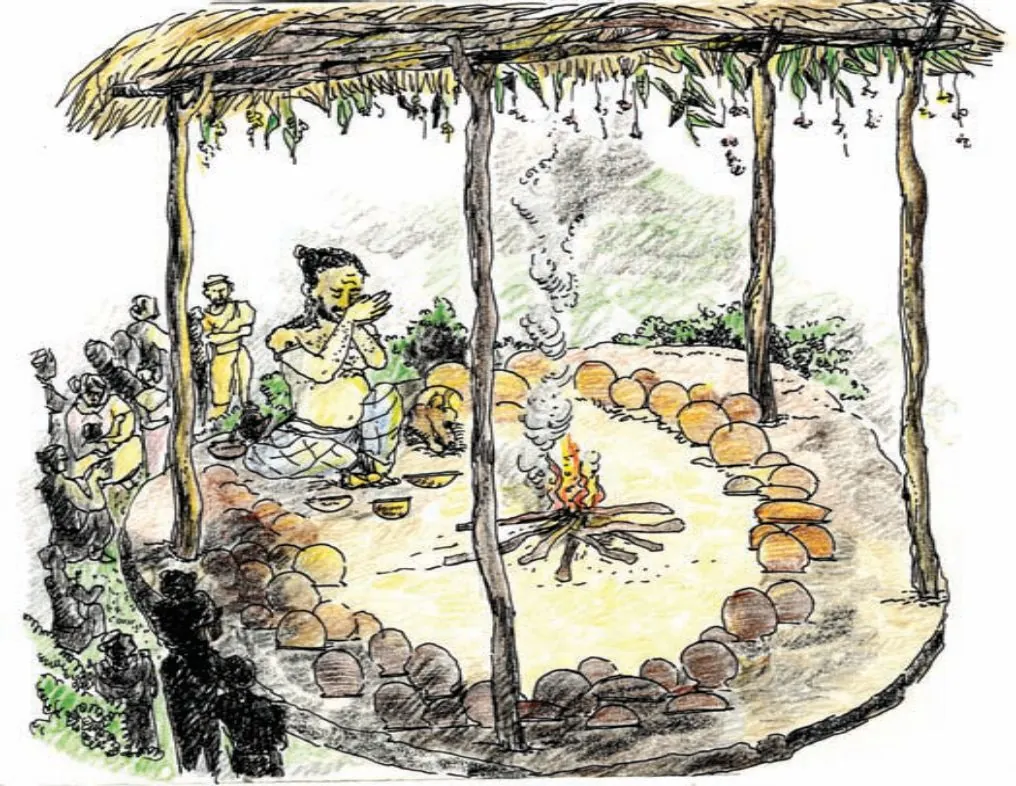 Illustration 5.1 – Artist's reconstruction of the Galpaya devala
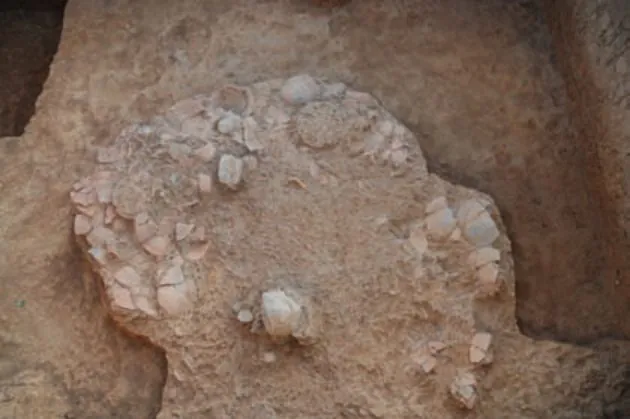 Fig 5.5 – Ruins of the Devalaya at Pallebadde Galpaya (Sabaragamuwa)
5.2.4 Indigenous knowledge – measures
Area measures: 1 Karisa = 4 Amunas; 1 Amuna ≈ 2 acres; inscriptions: Bhatikabhaya (Dunumadalakanda) gave 1 Karisa to a stupa; Kutakanna Abhaya (Horiwila) gave 8 Karisa to Tissa temple. Cycle: 40 Laha = 1 Pela; 12 Pela = 1 Kuruni (12 Kuruni…); 4 Kuruni = 1 Amuna (text cycle); 1 Amuna = ¼ Karisa. Length: smallest = atom (Paramanu); 36 Paramanu = 1 Anu; 36 Anu = 1 Thajjari; 36 Thajjari = 1 Ratharenu; 36 Ratharenu = 1 Likkha; 7 Likkha = 1 Ukha; 7 Ukha = 1 Dhannamasa; 7 Dhannamasa = 1 Angula; 12 Angula = 1 Viyath (span, 9 inches). Long distances: Gawwa, Yoduna, Usaba. Nissankamalla set up Gawuthakanu (distance posts, like km posts) – found at Katugahagalge and Weligatta (Southern Province). Weight: 4 Veeha = 1 Gunja; 2 Gunja = 1 Masaka; 2.5 Masaka = 1 Aka; 8 Aka = 1 Dharana; 5 Dharana = 1 Swarna; 2 Swarna = 1 Pala. Soraborawewa pillar inscription forbids unapproved weights and scales. Numerals: ancient numerals 1–10 in inscriptions (Chart 5.1); Arabic numerals are modern. Time: Varshaya (lunar months); 30 days = 15 Purapakshaya + 15 Awapakshaya; months Duruthu, Navam, Medin; year = Vasa / Havajara (Sanskrit Samvatsara → Havurudu → Avurudu); day = Thithiya (Thatha – Rajagala inscription of King Abhaya, Batticaloa); moment = Muhurtha → Mohotha.
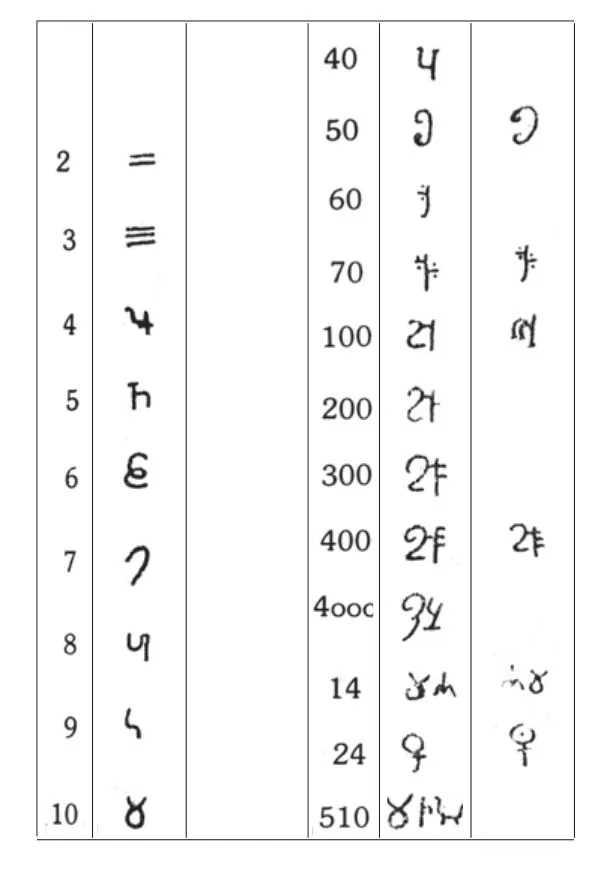 Chart 5.1 – Ancient numerals found in Sri Lankan inscriptions
Dedigama elephant lamp (Eth Pahana)
- Found in the Dedigama (Punkagama – birthplace of Parakramabahu I) Suthighara Stupa, Kegalle, excavated 1951: bronze lamp with two human figures on an elephant holding a sugar cane; oil stored in the elephant's belly refills the lamp automatically (static hydrology).
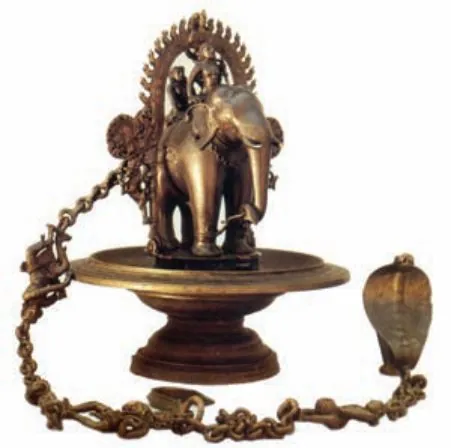 Fig 5.6 – Bronze elephant lamp from Kotawehera, Dedigama (Kegalle)
Important Facts
- Sluice technology of Sri Lanka spread through South Asia.
- Eastern science (e.g., Chinese) influenced the world.
- Local rituals are an indigenous knowledge system.
Timeline
| Date | Event |
|---|---|
| 28 000 yrs ago | Pressure-flaked alabaster tools |
| 2400 B.C. | Iron slag in Beragala tomb |
| 1350 B.C. | Clay tube for air in cremation tomb |
| 1129 B.C. | Udaranchamadama house |
| 3rd c. B.C. | Samanala Wewa iron smelting |
| 180 B.C.–200 A.D. | Dehigaha Elakanda smelting |
| 2nd–3rd c. A.D. | Galpaya devalas |
| 5th c. A.D. | Sigiriya city |
| 1951 | Dedigama lamp found; 1982 – Alahana hospital excavated; 2009 – Galpaya devala |
Exam focus
- Parts of a tank (bund, ralapanawa, sluice, bisokotuwa).
- Ruwanweliseya foundation; lightning conductor.
- Sigiriya fountains principle; iron smelting; Dedigama lamp.
- Units of measure and the meaning of Avurudu.