
100%
Textbook: Unit 6 (printed pp. 77–89)
0. Introduction
- Knowledge systems differ among societies but support their sustainability; knowledge passed on is cultural heritage.
- Six concepts studied: social organization, law and tradition, finance and exchange, representation of women, local food, protecting the environment.
6.1 Social Organization in the Historical Era
- Hierarchy – vertical (king → ministers → officials) and horizontal (ministers, generals, treasurers – equal in power).
- Social structure (Chart 6.1, Prof. Senaka Bandaranayake, 2013)
| Level | Group |
|---|---|
| Top | King (noble; virtuous and of royal lineage – e.g., Nara Isera of Kutakanna Tissa, Dambulla) |
| Royal officers | Radkol Samdaru ("Raja Kula Swami Daru"), later Radala (Rajakula > Radkol > Radol > Radala) in the Kandyan kingdom |
| Clergy | Buddhist monks – advisers; in the 1st–2nd c. A.D. temples were given the right to collect tank taxes |
| Chieftains | Rich merchants, naval captains, doctors, teachers (not farmers/herders) |
| Common people – Kudeen | farmers, herdsmen, potters, gem-cutters, blacksmiths, fishermen |
| Bottom | Slaves: Anwayathadasa (hereditary) and Dhanankeethadasa (bought) |
- Traders and government officers acted as mediators between people and rulers.
- Social cohesion was protected by the king maintaining bonds among all groups.
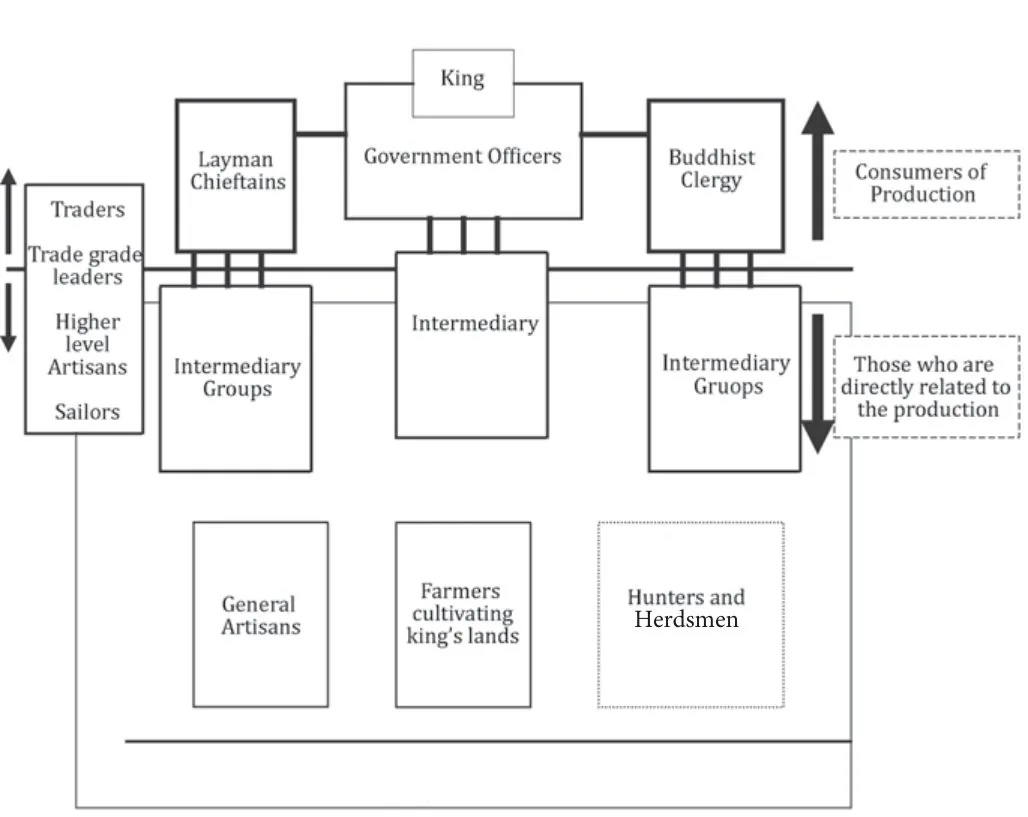 Chart 6.1 – Social organization of ancient Sri Lanka (Prof. Senaka Bandaranayake, 2013)
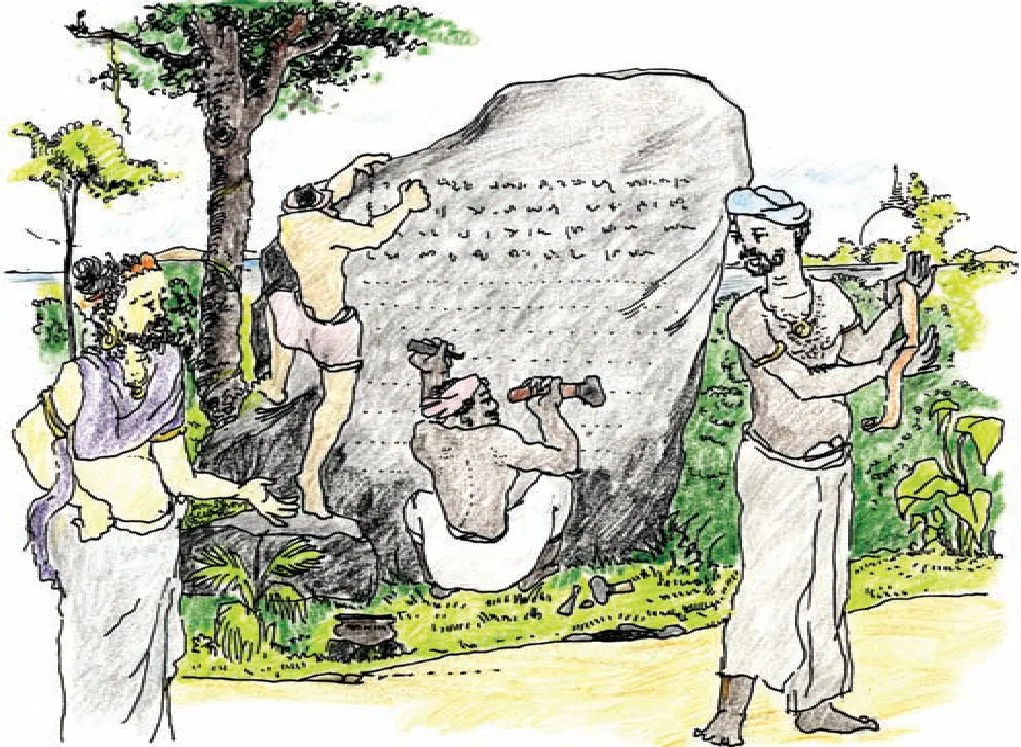 Illustration 6.1 – Kings recorded grants and laws on rock so that they would last
6.2 Law and Tradition
- Principles of society are written laws or traditions.
- Manawamma dynasty (9th c. A.D.) inscriptions: Wadala (legislature – king's court) and Sabhawa (judiciary).
- Security officers: Mekapper (from Tamil Mayikappar); Dandanayaka (e.g., Sithnarubima Buddhanayake who protected Vijayabahu I – Panakaduwa plate).
Tax law (1st–2nd c. A.D. inscriptions)
| Tax | Sanskrit | Meaning |
|---|---|---|
| Dakapathi | Udakaprapthi | Tank-water use |
| Bojakapathi | Bhojakaprapthi | Cultivating royal land |
| Mataramajibaka | Mathrikamathsyabhaga | Fishing in water channels |
- One-sixth of produce was paid as tax; one nut in ten (9th c.). Customs collected at harbours – Godawaya inscription (1st c. A.D., Hambantota) gave a nearby fort's customs to the temple.
- Courts: Gajabahu I's Sithulpawwa inscription – fines of the Mahavinichaya (Great Hall of Justice) given to monks.
Laws protecting agriculture and trade
- Kondawattawan inscription (9th c.): fine of five Kalan for not ploughing at the right time (prevents soil erosion).
- Wessagiriya inscription of Mahinda IV: only Sihineti paddy and green gram (mun) to be sown in paddy fields.
- Sorabora Wewa (Badulla) inscription of Udaya III (946–954): laws for the Hopitigama market – tax from traders but not from passers-by; double tax for hiding trade; no unapproved Madatiya weights; areca/betel sold in covered huts; oil tax for trading on poya days.
Laws protecting life
- Amandagamini Abhaya (19–29 A.D.) – "Maghatha" law: no killing of animals.
- Mihindu IV (956–972) – Mihintale inscription: death for killing buffalo, ox, cow, goat; Wewalkaetiya inscription: death by hanging for murder; cattle thieves branded on forehead; Gruhadanda – villagers taxed until they caught criminals.
- Nissankamalla (1187–1196) – birds in reservoirs not to be killed.
- Roman-Dutch law came much later.
6.3 Finance and Exchange
- First barter; clay discs may have been used as tokens.
- Coins from c. 250 B.C. – Hasebu coins (silver punch-marked, Indian origin, round/square/rectangular) = Kahapana (inscriptions)/Kahavanu (literature), from Sanskrit Karshapana.
- First local coin (late 1st c. B.C. / early 1st c. A.D.): Elephant and Swastika coin.
- Rupa Adyaksha / Rupadaka – officer who minted coins (2nd c. B.C.).
- Metal-weight value: gold piece from Abhayagiri inscribed "Ran Devisi Kalanda" (8th–9th c.); Kashyapa IV gave 200 Ran Kalan to Veerankura temple (Wessagiriya inscription, 10th c.).
- Foreign coins: Roman (most numerous, mostly copper), Chinese, Arabic, British, V.O.C. (Dutch East India Company). Customs paid in coins weighed by metal.
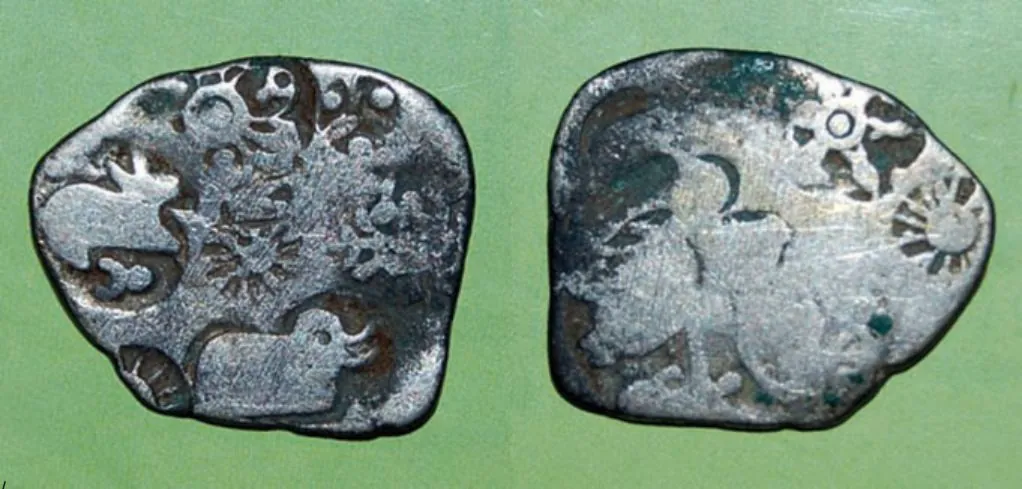 Fig 6.1 – Hasebu coins, among the oldest used in Sri Lanka (made in India)
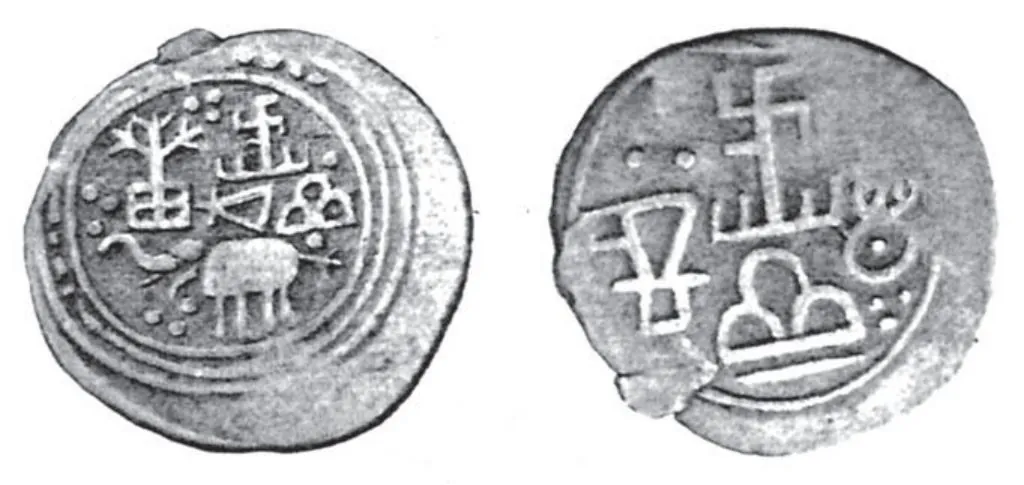 Fig 6.2 – Elephant and Swastika coin
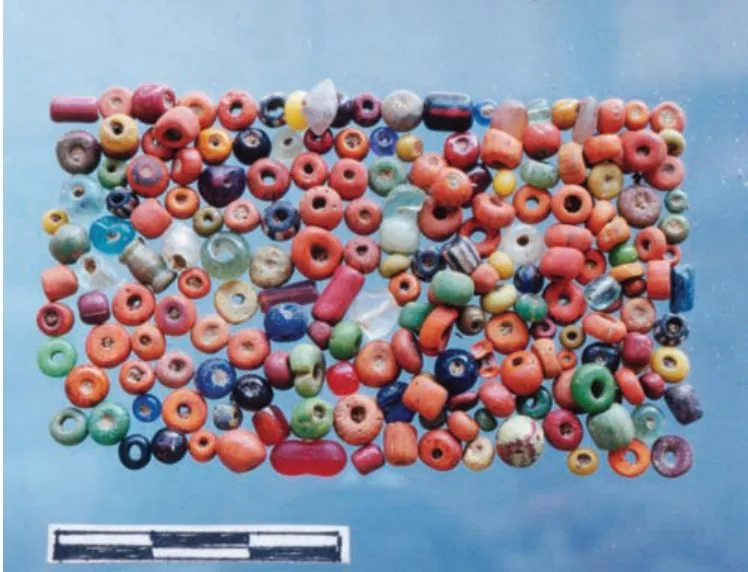 Fig 6.3 – Colourful beads from ancient Magama
6.4 Representation of Women
- Women respected as mothers and sisters; allowed to rule: Queen Chula Seewali (Neelagiri stupa inscription, Lahugala); Queen Leelawathi ruled three times.
- Rasawahini: woman living alone three years while husband traded abroad; Vihara Maha Devi said there is no happiness without children.
- Girls could marry at 16; parents taught cookery (Sahassawathuppakaranaya); Ashokamala (Prince Saliya's wife) won hearts by cooking – skilled cooks were Madhupachika / Madhurahaththarasa (Dampiyaatuwa Gatapadaya).
- Leadership: Parumakalu Samana, wife of Parumaka Nadika (Brahmanayagama, Anuradhapura, 2nd c. B.C.).
- Women donors: Thalatha Lakshmi (Kokebe inscription, 2nd c. A.D., king Bhatiyatissa) gave half of family property to a temple.
- Archaeology: kohl stick, ochre stones and clay bead at Udaranchamadama (1129 B.C.); Ibbankatuwa necklace (700–450 B.C.) with imported beads.
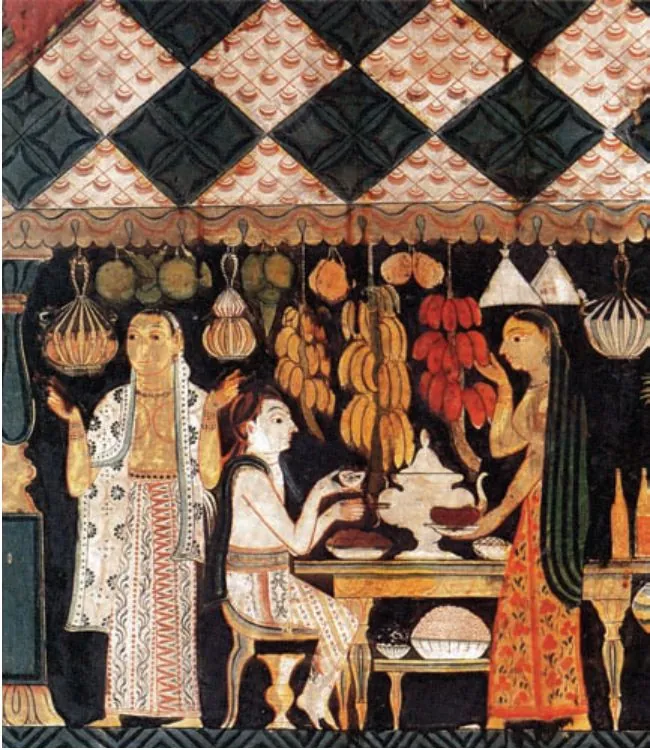 Fig 6.4 – 19th-century painting of people eating, Mulkirigala temple
6.5 Local Food
- Pre-historic: wild breadfruit and Atikesel at Beligala (Belilena) cave 10 500 years ago.
- Seven grains in books: Sali, Veehi, Kedesa, Varaka, Kangu, Duma, Yawa. Others: undu, mun, thala, maa, amu, meneri, kurakkan (Thonigala inscription of Keerthi Sri Meghavarna Abhaya (301–328 A.D.)).
- 12th c. – elites ate peacock meat in ghee with El Hal; the poor ate Pala Maluwa and Kadi Embula with Niwudu rice.
- Kenda (gruel) – Yagu/Hambu/Ambu/Kaadi; Diya Kenda, Yawagu/Ulu Kenda (1 rice : 6 water, for patients), Rasa Ulu Kenda (milk, honey, ghee, orange juice), Embul Kenda (medicinal leaves).
- Athsunu (fried grain flour), Thila Sangulika (sesame balls), yams (Wel Ala, Kukulala, Kondola, Bathala), vegetables (Labu, Puhul, Karabatu, Kekiri, Murunga, Thibbatu…).
- Cooking: Bedum (fried), Mellum, Hodda (gravy); vegetable curries Anama, Embula, Niyambalawa.
- Spices (Katuka Bhanda / Kulu Badu): Thuna Paha = salt, dill, chilli + five (white and black dill, coriander, mustard, uluhal). Sours: dehi, dodam, goraka, nasnaran. Karambembiya = curry leaves.
- Oils Kana thel: Dunthel and Githel (ghee); coconut oil less.
- Milk and curd (Dee Kiri, Kirigeri); Poojawaliya – father gives cattle to daughter "to eat curd".
- Fish/meat eaten; Mathrika Mathsya Bhagaya was the fish tax.
- People preferred natural, unprocessed foods.
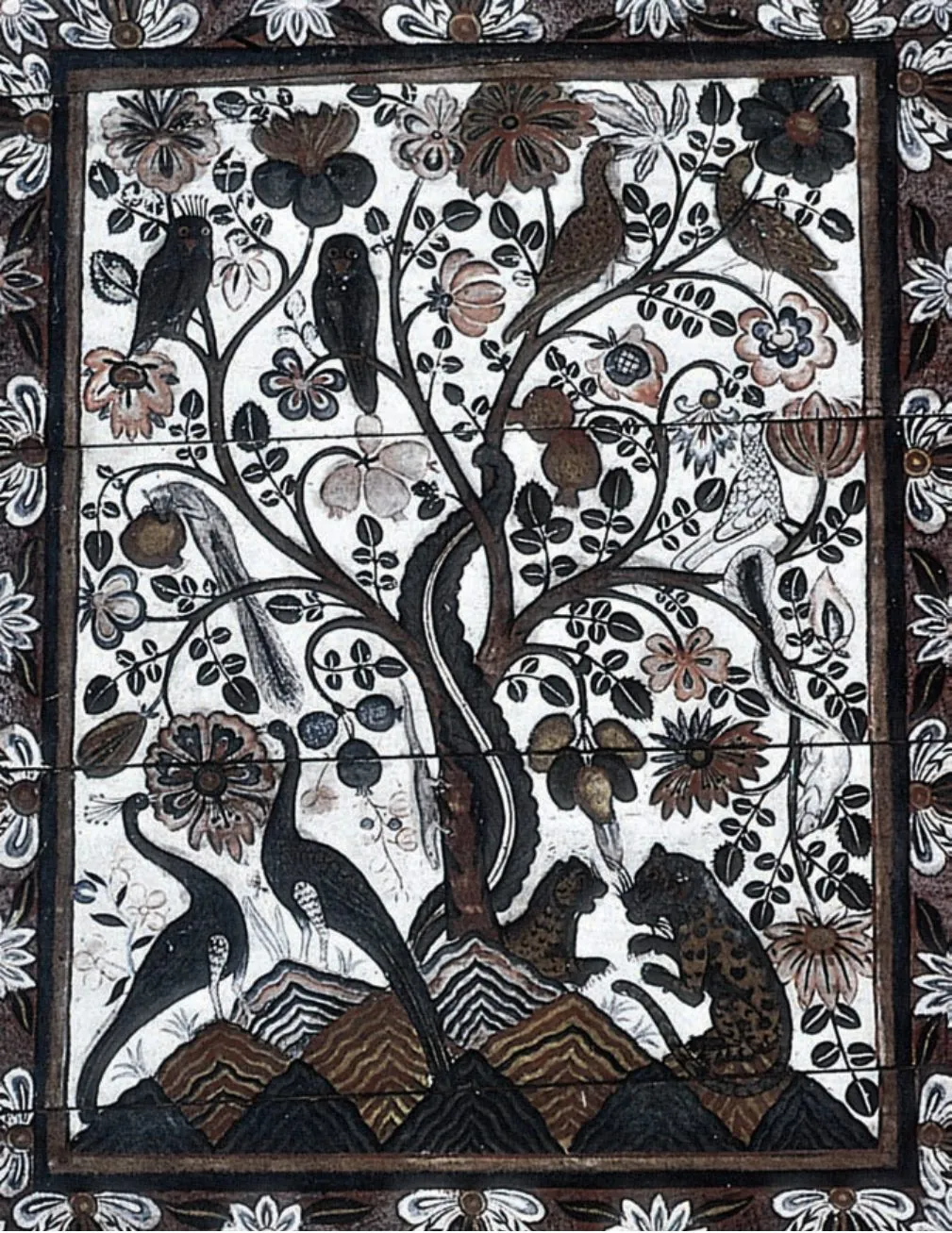 Fig 6.6 – 19th-century painting at Kelani temple showing the lively environment
6.6 Protecting the Environment
- Soil erosion, water shortage and lower yields follow deforestation.
- Mihindu IV – Anuradhapura plate: no clearing forests on high lands.
- Udaya III (935–938) – Buddhannehela inscription: "Wal wala dandupath nokapanu isa" – no cutting of forest trees.
- Kashyapa V – Kondawattawan inscription: officials must follow rules on trees and wood.
- Laws also protected wild animals and soil.
Important Facts
- Hierarchy: vertical and horizontal; slaves at the bottom; clergy and kings at top.
- Maghatha law – Amandagamini Abhaya.
- Hasebu → Kahapana → local elephant–swastika coin.
- Women could rule and own property.
- Seven grains; Thuna Paha; Kenda.
Timeline
| Date | Event |
|---|---|
| 10 500 yrs ago | Wild breadfruit eaten at Beligala |
| 1129 B.C. | Udaranchamadama kohl stick |
| c. 250 B.C. | Hasebu coins |
| 19–29 A.D. | Maghatha law |
| 301–328 A.D. | Thonigala inscription |
| 9th c. A.D. | Manawamma-dynasty inscriptions; Kondawattawan law |
| 946–954 | Udaya III Sorabora Wewa inscription |
| 956–972 | Mihindu IV laws |
| 1187–1196 | Nissankamalla bird protection law |
Exam focus
- Chart of social organization; Radala origin.
- Tax types; Hopitigama market rules.
- Evidence for women's status.
- Environmental laws and the kings who made them.