
100%
Textbook: Unit 7 (printed pp. 91–105)
0. Introduction
- Anuradhapura (North Central dry zone) and Magama (Southern dry zone) were great cities for a long time. Anuradhagrama became a city under Pandukabhaya (Mahawamsa).
- Urbanization is a long gradual process driven by internal economic growth and foreign trade.
- Urbanization – a village turning into a city. Village: small, kin-based. City: large population linked by professions, trade, craftsmanship, a ruling structure and a script. Social stratification – differences by wealth (working class, middle class, capitalist class).
7.1 Background of Urban Life
- Basic urban features at Anuradhapura and Magama by c. 450 B.C.
- Evidence from 2400 B.C. that people settled and farmed → villages.
- Differences in soil fertility and skill created surplus (Athirikthaya) for some farmers.
- Jataka Atthakatha story: a villager borrowed a bag of paddy from the village leader, who was rich through surplus. The leader's power came from wealth – like Parumaka and Batha in inscriptions. Rich/poor division = origin of social stratification.
7.2 The First Urbanization
- By 450 B.C. social stratification was largely complete; many surplus-owning chieftains (Parumakas) used imported goods (pottery, beads found at Anuradhapura and Tissamaharama) to show prestige.
- Indian Ocean trade brought wealth → need for administration → planned settlement with markets, religious buildings, parks, moats and tanks = a city.
- Anuradhapura (planned by Pandukabhaya) was capital for about 1400 years; self-sufficient with village produce, iron industry and irrigation. Magama reflected southern culture.
- After the 6th c. A.D. Arab traders controlled Indian Ocean trade; after the 9th c. trade centred on the eastern Indian Ocean (South-East Asia, South China) → Vijayabahu I chose Polonnaruwa.
- Under Parakramabahu I South-East Asian influence grew; later kings married royals of Burma and Cambodia; South-East Asian features in Polonnaruwa Gal Vihara Buddha statues and Sathmahal Prasada.
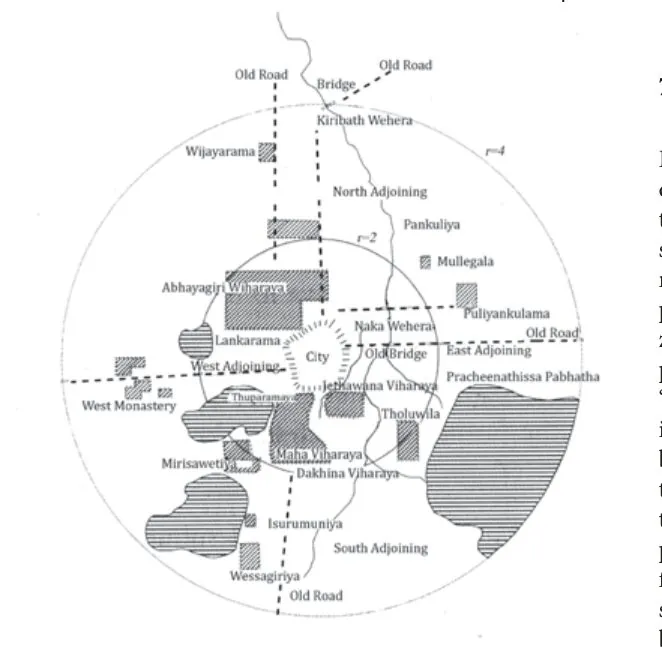 Plan 7.1 – Sketch plan of ancient Anuradhapura
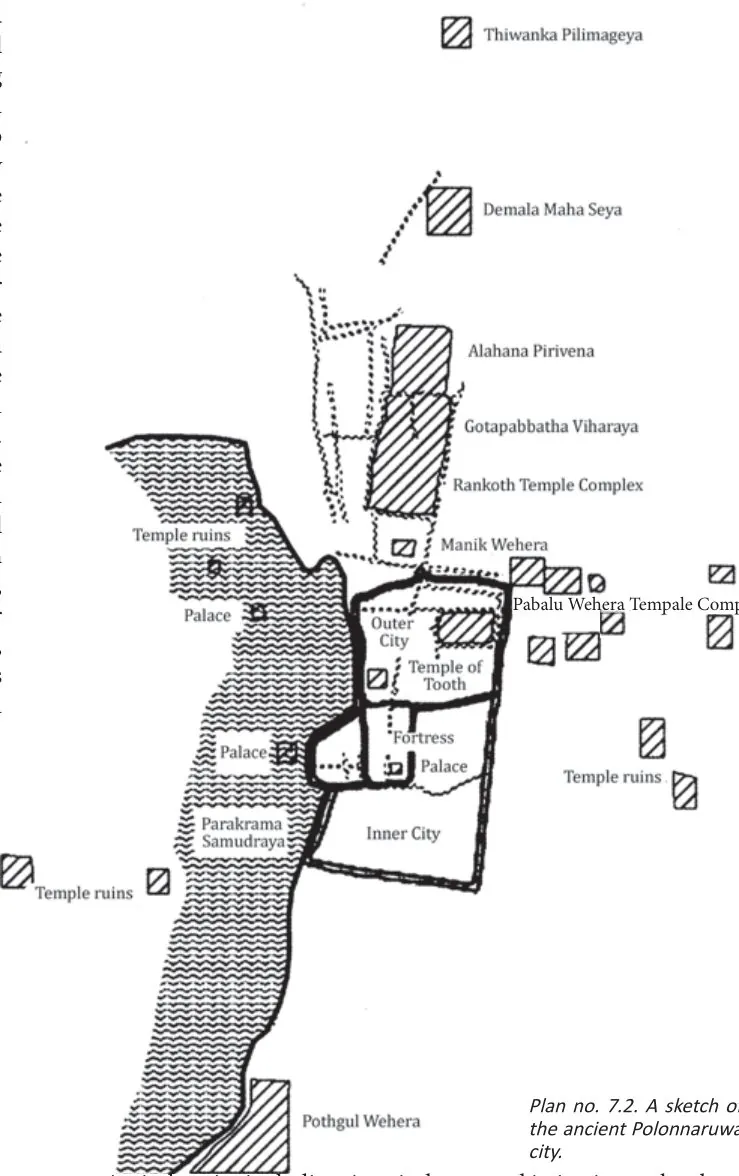 Plan 7.2 – Sketch plan of ancient Polonnaruwa
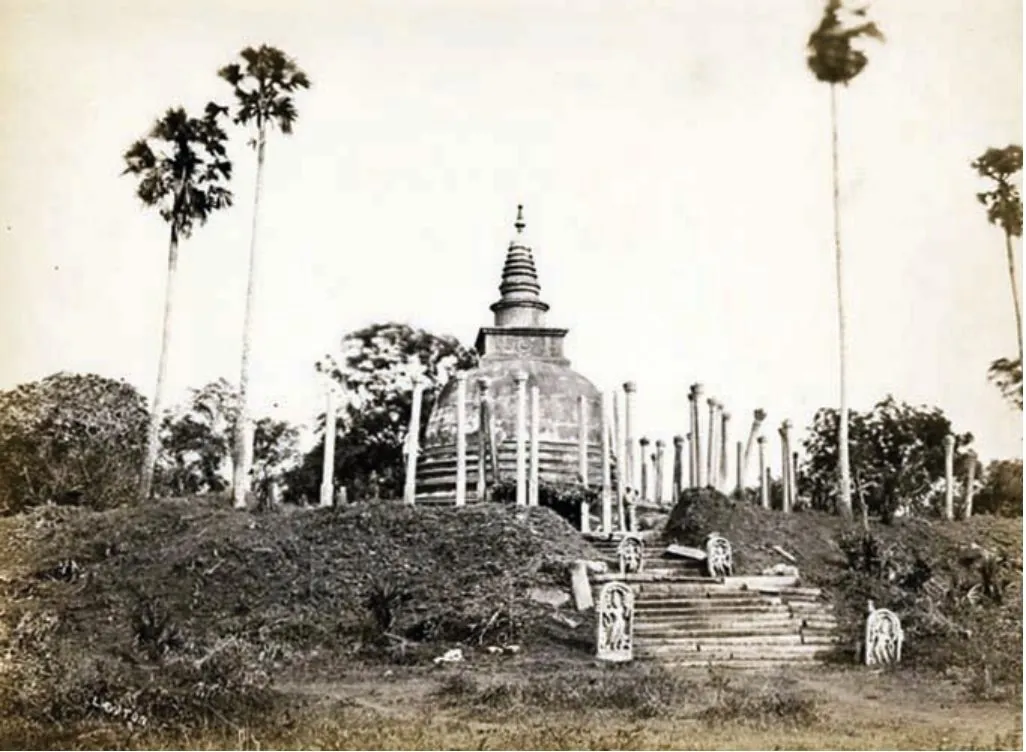 Fig 7.1 – Thuparama stupa in a ruined and overgrown state before recent restoration
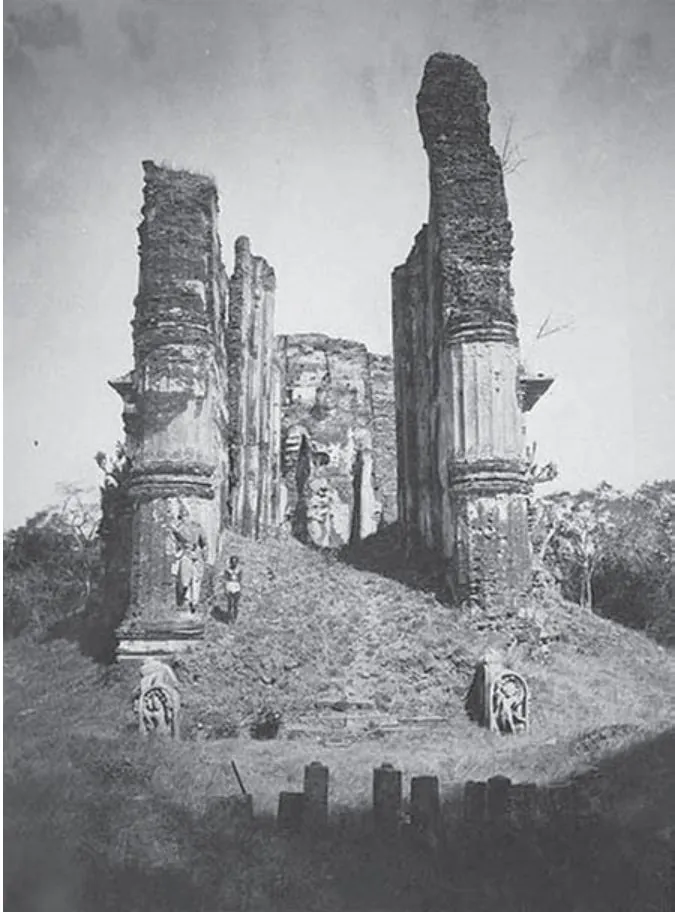 Fig 7.2 – Polonnaruwa Lankathilaka image house before reconstruction
7.3 Downfall of Polonnaruwa
- Mihindu V (last Anuradhapura king) fell to Cholas; Vijayabahu I freed the country and made Polonnaruwa capital; Parakramabahu I reunited it and rebuilt irrigation.
- Reasons for decline
| # | Reason | Detail |
|---|---|---|
| 1 | Weak rulers | 12 rulers in 29 years (1186–1215); only Nissankamalla ruled 9 years firmly |
| 2 | Pandya–Kalinga struggle | Kalingas brought Chodaganga (nephew), Sahasamalla, Kalyanawathi; Pandyans brought Queen Leelawathi to power three times |
| 3 | Economic deterioration | Tanks/anicuts neglected; trade fell |
| 4 | Invasion of Kalinga Magha, 1215 | Looting, torture, destroyed statues and temples (Mahawamsa); people fled to Ruhuna, Malaya Rata, Maya Rata |
- Ruwanweli, Abhayagiriya, Jetavanaramaya went into wilderness.
- General causes of decline of ancient cities: invasions, collapse of central rule, insecurity, paralysis of trade and transport, migration.
7.4 The Second Urbanization
- Features: several ruling centres, new harbours, literary revival, new trade networks. Cities are smaller and not geometrically planned.
Kingdoms of the South West
| Kingdom (dates) | Rulers and key events |
|---|---|
| Dambadeniya (1232–1272) | Interregnum 1215–1232: local leaders held citadels – Subha Senevi (Yapahuwa), Buwanekabahu (Govindamalaya, Ruhuna), Sankha Senevi (Gandeniya, Mahiyangana). Vijayabahu III (1232–1236), a Wanni Nayaka, founded the kingdom; tooth and bowl relics (hidden in Kothmale) brought to a Dalada Maligawa at Beligala; built Vijesundararama; reformed Sangha (Upasampada). Parakramabahu II (1236–1270) – educated under Sangharakkhitha; title Kalikala Sahitya Sarvajna Pandita; repelled Chandrabhanu (Javaka, 1247); defeated Magha (c. 1255, besieging Polonnaruwa east and west); defeated Chandrabhanu again at Yapahuwa (c. 1261) with Pandya help; minister Deva Pathiraja |
| Yapahuwa | Vijayabahu IV (Bosath Vijayabahu, 2 yrs, killed in a coup); Buvanekabahu I (c. 1272–1284) moved capital to Yapahuwa; faced rebels and invasions (Kalingarayara, Chodanga); sent envoys to the Sultan of Egypt, welcomed in Cairo, April 1283. After him Arya Chakravarthi took the Tooth Relic to the Pandya king Kulashekara; Parakramabahu III (from 1287) brought it back to Polonnaruwa |
| Kurunegala (1293–c. 1341) | Buvanekabahu II (1293, 9 yrs) retook tooth relic from Polonnaruwa; Parakramabahu IV (1302) – Jataka translated into Sinhala; works Dalada Siritha, Sinhala Bodhivamsa, Anagatha Vamsa, Dalada Poojavaliya; successors Vanni Buvanekabahu III (Kurunegala tank by folklore) and Savulu Vijayabahu V |
| Gampola (from 1341) | Founded by Buvanekabahu IV (1341); Dedigama rival Parakramabahu V; Jaffna (Arya Chakravarthi) and Rayigama (Alakeshwara) kingdoms existed. Succession from uncle to nephew / sister's son (matriarchal). Families: Senadhilankara and Alakeshwara; Nissanka Alakeshwara built Kotte fortress, beat Arya Chakravarthi's tax collectors. Ibn Battuta (1344) visited Jaffna and Sri Pada, mentions Alakonar with white elephant. Chinese admiral Cheng Ho landed 1405, 1409, 1411; trilingual (Chinese, Persian, Tamil) Galle inscription (1409) at Devundara; he captured Veera Alakeshwara (1411). Monuments: Lankathilaka and Gadaladeniya temples (Buvanekabahu IV) |
| Kotte (1415–) | Parakramabahu VI (1412 Rayigama; 1415 Kotte coronation; ruled to 1467), protected by Veedagama Thero; parents Jayamahalena and Sunethra Devi; brought Wanni under Kotte; Prince Sapumal captured Jaffna; suppressed Count Jothiya (Uda Rata); patron of literature. Successor Jayabahu (grandson via Ulakudaya Devi) killed by Sapumal → Buvanekabahu VI (1469); Sinhala Sangha rebellion (Pasyodun Rata Sinhala Peraliya) suppressed by Prince Ambulugala; Abhayadana Shilalipiya (Dedigama inscription) pardoned rebels. Parakramabahu VII (Pandita); Veera Parakramabahu VIII (c. 1490); Portuguese arrived in 1505 |
Map 7.1 – Distribution of ancient kingdoms in Sri Lanka — practise it on the interactive map.
Plan 7.3 – Sketch plan of ancient Yapahuwa
Plan 7.4 – Sketch plan of ancient Kurunegala
Jaffna and the Vanniyars
- Jaffna kingdom – founded by Vijaya Kulankeyi Arya Chakravarthi; texts: Yalpana Vaipava Maalai (18th c.), Kailaya Maalai, Segarasasekaram. Twelve rulers (Kulasekara, Vikrama, Varodaya, Marthanda…). Brought under Kotte by Sapumal; loosened after Parakramabahu VI; surrendered to the Portuguese later.
- Vanni – small rulers in low-population areas (East, North Central, North Western); 18 Vanni areas by Parakramabahu VI's time; Vijayabahu III originally a Vanni leader; under the main kingdoms in strong periods; also under Kandyan kings.
7.4.1 Economy
- Wet-zone agriculture relied on rain (no huge tanks); paddy, chena in dry places; shift to commercial economy.
- Exports: cinnamon (main), areca nut, cardamom, nutmeg, pepper, pearls, gems, elephants, tusks. Partners: India, Arabia, China, Persia, Egypt. Trade was a royal monopoly. Chinese porcelain at Dedigama; Ibn Battuta on west-coast ports.
7.4.2 Religion
- Buddhism main; Tooth Relic palaces. Gods: Upulvan, Vibhishana, Skanda Kumara, Saman; Shiva Devala near Sri Jayawardhanapura; Munneswaram (Chilaw); Muslim settlements at ports.
7.4.3 Arts, architecture and literature
- Yapahuwa – Pandyan and Cambodian influence; Gadaladeniya (South Indian style, Upulvan devala attached); Lankathilaka; Embekke Devala (wood carvings, Vikramabahu III).
- Dambadeniya literature: Kavsilumina (Parakramabahu II), Saddharmaratnavaliya (Dharmasena), Poojavaliya (Mayurapada Buddhaputra), Sidatsangarava, Elu Sandes Lakuna, Dambadeni Katikavata, Kandavuru Siritha, Yogarnavaya; Pali: Visuddhimagga Sannaya, Samantakuta Varnana, Rasavahini, Sarasangraha, Bhesajjamanjusa, Hatthavanagalla Vihara Vamsa, Thupavamsa.
- Kotte literature (golden age): Sandesha poems (Mayura, Thisara, Selalihini, Parevi, Hansa, Gira), Kavyashekharaya, Buduguṇālaṅkāraya, Loveda Sangarava, Guttila Kavya, Perakumba Siritha, Pansiya Panas Jataka Pota; Pali: Parami Shathakaya, Jinabodhavali, Balavatara; Sanskrit: Bhakti Shatakaya; scholars Thotagamuve Sri Rahula, Keragala Vanaratana, Irugalkula Thilaka Pirivena monks; pirivenas: Pepiliyana Sunethradevi, Keragala Padmavati, Devinuvara Irugalkulatilaka, Veedagama Gunananda.
Important Facts
- First urbanization: Anuradhapura, Magama, Polonnaruwa. Second: Dambadeniya, Yapahuwa, Kurunegala, Gampola, Kotte, Jaffna.
- Fall of Polonnaruwa: 1215 (Magha).
- Kotte = golden age of Sinhala literature; Gampola – Sandesha poems began.
Timeline
| Date | Event |
|---|---|
| 450 B.C. | Beginnings of urban life |
| 1186–1215 | 12 rulers |
| 1215 | Magha's invasion |
| 1232 | Dambadeniya founded |
| 1247 / c. 1261 | Chandrabhanu invasions |
| c. 1255 | Defeat of Magha |
| 1283 | Egypt mission |
| 1293 | Kurunegala |
| 1341 | Gampola |
| 1344 | Ibn Battuta |
| 1405–1411 | Cheng Ho |
| 1415–1467 | Parakramabahu VI at Kotte |
| 1505 | Portuguese arrive |
Exam focus
- Compare the two urbanizations.
- Reasons for Polonnaruwa's fall.
- Achievements of Vijayabahu III, Parakramabahu II, Parakramabahu VI.
- Mark on a map: Anuradhapura, Polonnaruwa, Dambadeniya, Yapahuwa, Kurunegala, Gampola, Kotte, Jaffna.
Map-marking guide
North Central dry zone: Anuradhapura, Polonnaruwa; North Western: Yapahuwa, Kurunegala, Dambadeniya; Central hills: Gampola, Dedigama; Western coast: Kotte, Rayigama; Far north: Jaffna.