
Textbook: Chapter 1 (printed pp. 1–18)
0. Introduction
- Industrial Revolution = the broad change in industry and technology, over about six decades, in which goods were produced by machines instead of manual labour.
1.1 Beginning and Development
- Began in Britain in the late 18th century; confined to Britain for about half a century; spread across Europe and the world in the 19th century.
- Other colonial powers (France, Portugal, Spain) existed – so why Britain?
Reasons it began in Britain
| Reason | Explanation |
|---|---|
| Wealth and trade | Since the 16th c. Britain overtook Holland, France, Portugal and Spain; a wealthy investor class emerged |
| Population growth | Higher demand for goods |
| Science after the Renaissance | Knowledge used to build machines |
| Natural resources | Iron, steel and coal (energy) |
| Colonial markets | Commercial laws blocked colonies from trading with others → guaranteed demand (e.g., Indian demand for British cotton cloth) |
| Agrarian change | Encroaching (enclosure) movement – rich landowners merged small farms into large farms; dispossessed farmers moved to cities as labour |
| Free social environment | Talented people could earn money regardless of status |
| Banks and finance | Capital for industry |
| Political stability | Parliament gave freedom, tax relief and support to business |
| Geography | Small island; network of markets; London as centre for raw materials, capital and products |
1.2 Rise of the Industrial Revolution
Three base industries: textile, iron and steel, coal.
Textile industry
| Year | Inventor | Invention |
|---|---|---|
| 1733 | John Kay | Flying shuttle (faster weaving) |
| 1764 | James Hargreaves | Spinning Jenny (manual cotton-spinning machine) |
| 1769 | Richard Arkwright | Water frame (water-powered; large, needed flowing water) |
| c. 1779 | Samuel Crompton | Mule – finer, stronger thread |
| c. 1785 | Edmund Cartwright | Steam-powered loom/mule |
- Before this, thread from six spinners was needed for one weaver.
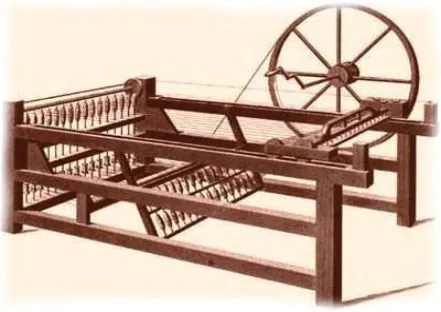 Fig 1.1 – The Spinning Jenny made by James Hargreaves in 1764
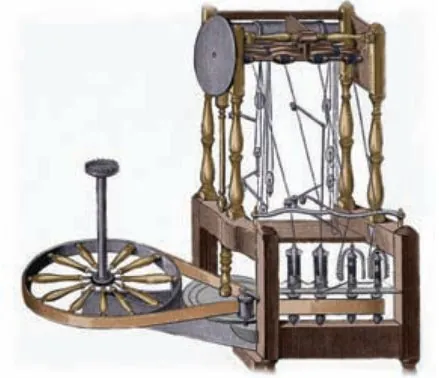 Fig 1.2 – The water-powered spinning machine produced by Richard Arkwright
Iron and steel industry
| Year | Inventor | Invention |
|---|---|---|
| 1730 | Abraham Darby | Smelting ore with coal; cast iron |
| 1784 | Henry Cort | Rolling mill – wrought iron |
| 1856 | Henry Bessemer | Removing impurities – cheap steel |
| 1860 | (open-hearth process) | High-quality steel |
| 1870 | Wilhelm Siemens | Electric furnace |
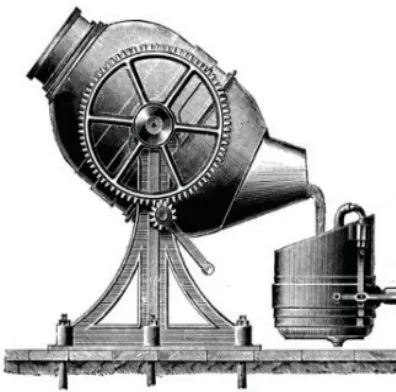 Fig 1.3 – Henry Bessemer's converter for producing steel
Coal industry
- Coal mines: South Wales, Yorkshire, Lancashire. Used for smelting, machines and homes.
- Problems: water in deep mines, poisonous gas, heat, darkness.
- 1735 Thomas Newcomen steam engine (pumping water; inefficient) → James Watt improved steam engine (text gives 1736) – efficient for many industries.
- 1812 Humphry Davy safety lamp; 1839 iron cables replaced women and children hauling coal.
- By-products: tar (roads), dyes, medicines, perfumes, oil, fertilizers.
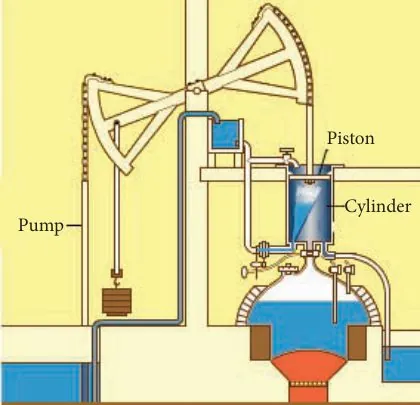 Fig 1.4 – Steam engine made by Thomas Newcomen (pump, piston, cylinder)
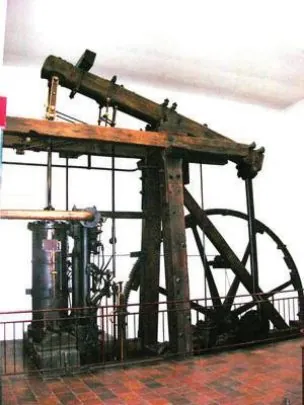 Fig 1.5 – Steam engine produced by James Watt
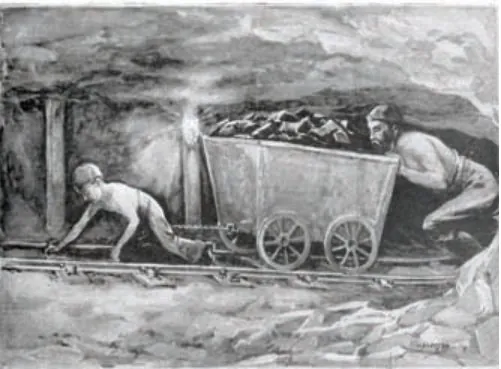 Fig 1.6 – Coal being hauled out of mines by women and children
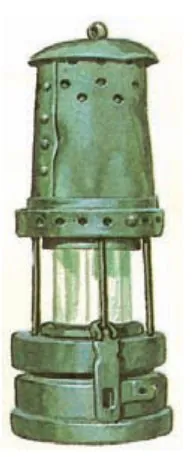 Fig 1.7 – Humphry Davy's safety lamp
Expansion of the Industrial Revolution
1. To other fields
Transport
- 1811 John McAdam – Macadam method (broken granite on a strong base of larger stones, pounded and levelled).
- 1814 George Stephenson – steam locomotive (he could not read until 17).
- 1807 Robert Fulton – steamboat; 1811 Henry Bell – passenger steamship; 1885 Daimler – motor car; 1903 Wright brothers – aeroplane.
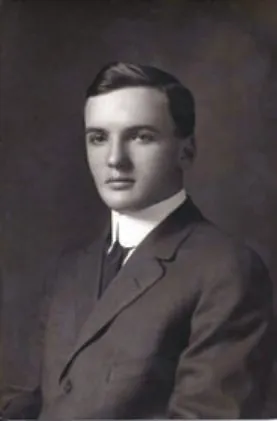 Fig 1.8 – George Stephenson
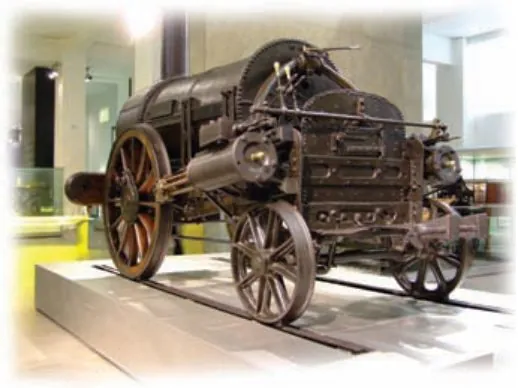 Fig 1.9 – Locomotive steam engine invented by George Stephenson
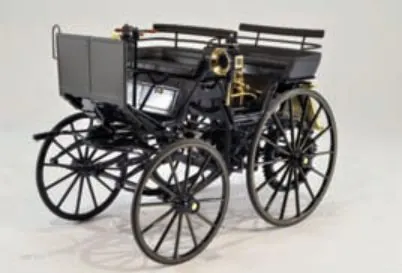 Fig 1.10 – Daimler's motor car
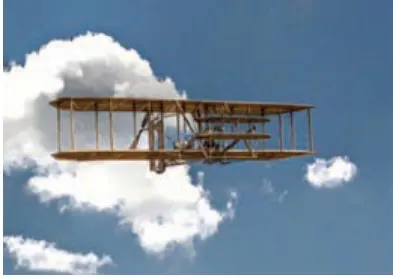 Fig 1.11 – Aeroplane built by the Wright brothers
Communication
| Year | Invention |
|---|---|
| 1840 | Penny Postal Service (one penny to anywhere) |
| 1844 | Samuel Morse – telegraph |
| 1876 | Alexander Graham Bell – telephone |
| 1895 | Guglielmo Marconi – radio signals |
| (20th c.) | John Logie Baird – television |
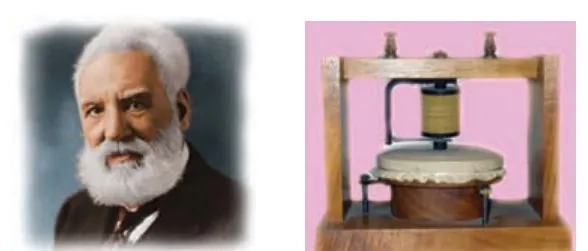 Fig 1.12 – Alexander Graham Bell, inventor of the telephone
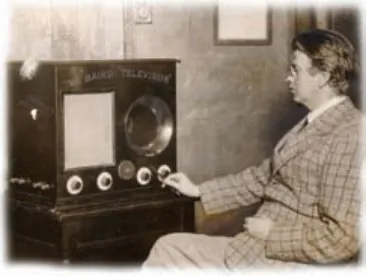 Fig 1.13 – John Logie Baird and his television
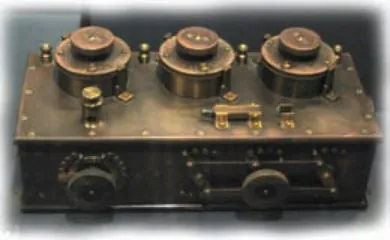 Fig 1.14 – Marconi's radio
Agriculture
- Mega farms (enclosures); crop rotation; Jethro Tull – seed drill / line sowing with horse-drawn plough; Robert Bakewell – selective sheep breeding; machines for clearing and seeding; guano fertilizer (first produced in Africa in 1800), later chemical fertilizers; cheaper food through storage and transport.
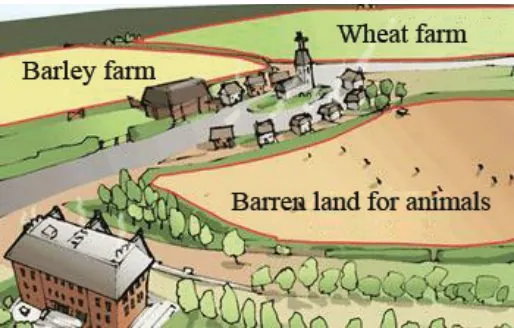 Fig 1.15 – Cultivation by crop rotation
2. To other countries
- Causes: rising world population/demand; improved travel and transport; coal in France and Germany.
- Germany became powerful by the time of World War I; France, Belgium, Austria, Hungary, Prussia followed (Austria built 30 000 miles of roads; Belgium doubled its roads). USA developed rapidly after independence; Japan in the late 19th–early 20th century (following Western models). Influence reached China, India and Sri Lanka by the 20th century → "global village".
Results of the Industrial Revolution
Political
- Rich investors vs. working class; unions, boycotts, struggles for rights → socialism and liberalism.
- Adam Smith's laissez-faire (reduced government role) spread capitalism.
- Competition for cheap raw materials and markets → neo-imperialism (after 1850) – a major cause of World War I.
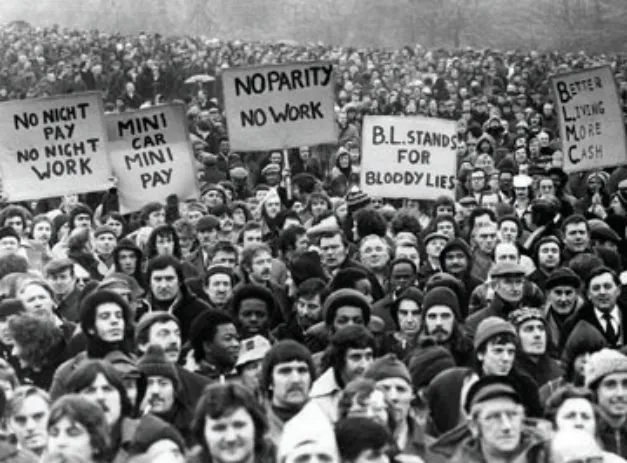 Fig 1.16 – Workers struggling for their rights
Economic
- Industry and commerce became central; self-sufficient agrarian economy collapsed and an import–export economy grew; wage-earning working class; joint-stock/multinational companies; banking and loans.
Social
- Positive: new cities, mass-produced goods, jobs, better living for many.
- Negative: overcrowding (e.g., Vienna's population +20 % in 20 years before 1847, houses +11.5 %), class society (landed aristocrats; middle-class businessmen, bankers, engineers, lawyers vs. working class), 12–14-hour days, child and women labour, slums, drunkenness, environmental pollution.
- Labour unions forced governments to pass welfare laws.
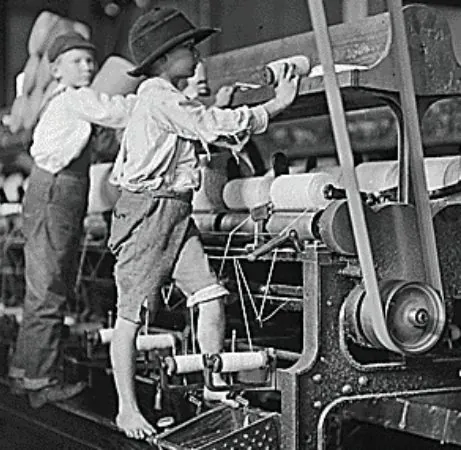 Fig 1.17 – Child labourers in factories during the Industrial Revolution
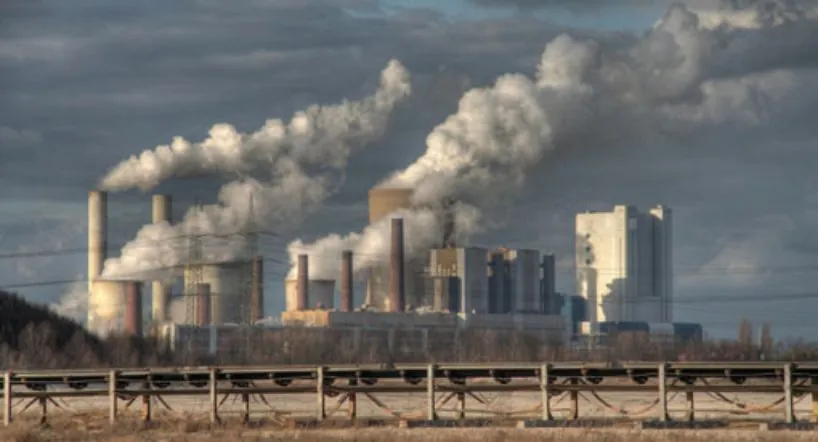 Fig 1.18 – A factory emitting poisonous gases
1.3 Effects on Sri Lanka
- No local industrialization in the 19th c., but as a British colony it felt the effects: large-scale tea, coconut, rubber estates and factories using imported machines.
- 1804 – Governor Frederick North started a coffee-pounding mill; machines in tea (drying, grading) and rubber processing; Macadam road method introduced in 1885.
- New classes: wage labourers; wealthy educated middle class of estate and factory owners; capitalism; import–export trade; banks.
- Transport: Colombo–Kandy road (Governor Edward Barnes); roads from Kurunegala and Dambulla; stone-and-tar roads; iron bridges replacing wood.
- Railways: Governor Henry Ward; Kandy line begun 1858; completed 1863; Colombo–Kandy train service August 1867; extended to Nawalapitiya 1871, Bandarawela 1899.
- Towns: Gampola, Badulla, Ratnapura, Matale.
- Communication: official postal service by 1815 (Colombo, Trincomalee, Galle, Kandy, Jaffna) using coaches – first in Asia; first stamp 1857; 340 post offices by 1903; telegram service 1858.
Important Facts
- Revolution began in Britain: textiles, iron/steel, coal.
- Key year list: 1733, 1764, 1769, 1779, 1785 (textile); 1730, 1784, 1856, 1860, 1870 (iron/steel); 1735–36, 1812, 1839 (coal).
- Laissez-faire – Adam Smith; neo-imperialism after 1850.
Timeline
| Date | Event |
|---|---|
| 1730 | Darby – coal smelting |
| 1733 | Flying shuttle |
| 1764 | Spinning Jenny |
| 1769 | Water frame |
| 1807 | Fulton steamboat |
| 1811 | McAdam roads; Bell steamship |
| 1814 | Stephenson locomotive |
| 1840 | Penny post |
| 1844 | Telegraph |
| 1876 | Telephone |
| 1895 | Radio |
| 1903 | Aeroplane |
| 1863 / 1867 | Kandy railway completed / train service |
Exam focus
- Reasons for the Industrial Revolution beginning in Britain.
- Inventions with inventors and dates.
- Political, economic and social effects.
- Effects on Sri Lanka (transport and communication).