
Textbook: Chapter 2 (printed pp. 19–40)
0. Introduction
After the Portuguese and Dutch held the coast, the British became the next power. This chapter covers how they established power and the struggles of the first half of the 19th century.
2.1 Arrival of the British in Asia
- East India Company: December 1600, royal charter from Queen Elizabeth I. First ships went to Sumatra; William Hawkins negotiated trade with Mughal emperor Jahangir.
- Early focus on South-East Asia (spice islands); rivalry with Portuguese and Dutch. 1623 – Ambon massacre: the Dutch killed English traders → the English withdrew and concentrated on India.
- Trade centres: Bombay, Calcutta, Madras (late 17th c.). French came from 1664 (Pondicherry, Karikal, Chandernagore). Anglo-French political struggle in India in the 18th century.
2.2 British Attention on Sri Lanka
- Ignored Sri Lanka for about a century (weak in India; strong Dutch forts). Interest grew in the first half of the 18th c. as the Mughal empire declined.
- Two main reasons: (1) location near India; control of the Bay of Bengal; (2) cinnamon and other goods (pepper, cardamom, cloves, pearls, gems, ivory).
- Trincomalee harbour – faces the Bay of Bengal; protects eastern Indian coast; shelter from the north-east monsoon; vital if the French might seize it.
Map 2.1 – Location of Sri Lanka and Trincomalee harbour — practise it on the interactive map.
Diplomatic contacts with Kandy
| Year | Envoy | King | Result |
|---|---|---|---|
| 1762 | John Pybus | Keerthi Sri Rajasinghe | Unsuccessful – English would not help against the Dutch |
| 1782 | Hugh Boyd | Rajadhirajasinghe | Unsuccessful |
| 1795 | Robert Andrews | Rajadhirajasinghe | King agreed to help; English later refused to share gains after taking Dutch forts |
2.3 Establishment of British Power – three stages
- East India Company captures the coast (1796).
- Coast becomes a British Crown colony (1802).
- Kandyan kingdom captured (1815).
Coastal areas
- French Revolution (1789) → French invaded Holland (1794); Stadtholder William V fled to Britain.
- Kew Letter (from Kew Palace): instructed the Dutch to admit British troops; Dutch governor Van Angelbeek (Funn Englebeck) received it in Feb 1795 but refused. British attacked Trincomalee (1795); then Batticaloa, Mullaitivu, Point Pedro, Jaffna, Mannar, Colombo, Galle surrendered. Treaty signed 16 February 1796.
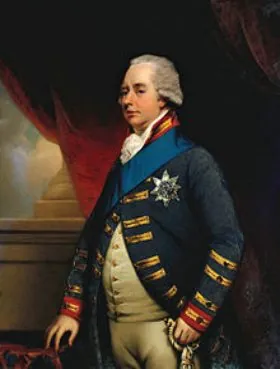 Fig 2.1 – Dutch Stadtholder William V
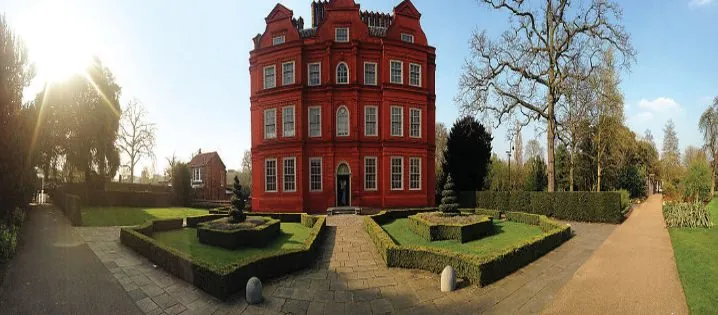 Fig 2.2 – Kew Palace, England
East India Company rule (1796–1798) – under Madras
- Resident; Collectors with Kachcheri; Avumildars; Madras officials ignorant of local language/culture; Mudaliyars sidelined.
- New taxes in cash – e.g., coconut-tree tax (one silver panam = 6 cents per tree for those with more than 10 trees) → 1797 rebellion across the coast.
- Meuron Commission (Brigadier De Meuron) recommended: local officers instead of Madras collectors; abolishing new taxes including coconut tax; separate judicial and revenue officers; restore the Dutch court system.
Dual administration (1798–1802)
- Governor Frederick North arrived October 1798; Company still collected revenue; governor responsible to Crown → conflicts. Ended 1802: coast declared Crown Colony.
Conquest of the hill country
- 1798 – Rajadhirajasinghe died; Pilimathalawe Maha Adikaram enthroned Kannasami as Sri Wickrama Rajasinghe; Muththusami fled to the British.
- 1800 – MacDowell mission (with 1164 soldiers and 8 cannons) – king refused entry of the army; mission failed.
- British reasons to take Kandy: threat to coastal security; cost of garrisons; king helped coastal rebels; French might ally with him; need for a Colombo–Trincomalee land link.
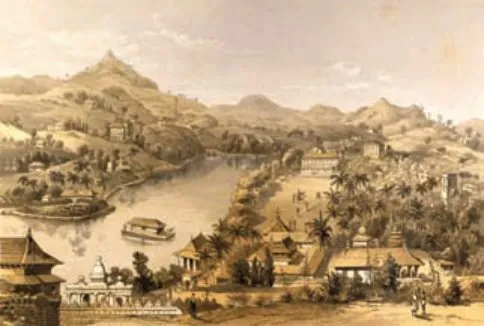 Fig 2.3 – Kandy, a naturally secure place
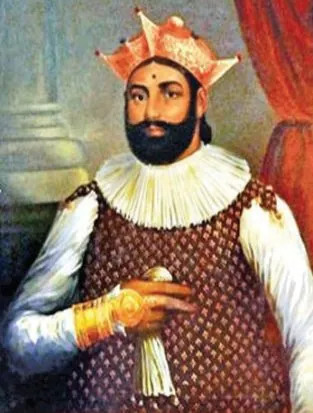 Fig 2.4 – King Sri Wickrama Rajasinghe
1803 invasion – Troops from Trincomalee and Colombo (Jan–Feb 1803); entered Kandy on 21 February; installed Muththusami; people rallied to the king; rains, disease, supply cutoff → British heavily defeated; Muththusami captured.
1815 invasion
- Governor Thomas Maitland (1805) planned patiently; John D'Oyly (Cambridge graduate; studied under monks Korathota Dhammarama and Morathota Dhammakkhandha; spies disguised as traders and palmists; won Kandyan chiefs).
- Governor Robert Brownrigg invaded in January 1815.
- Internal weaknesses: young king advised by Nayakkar relatives; quarrels with Maha Adikarams (Pilimathalawe executed; Ehelepola); rift with chiefs and monks; harsh forced labour (Bogambara tank, Pattirippuwa); Sabaragamuwa rebellion; massacre of Ehelepola's wife and children.
- King abandoned Kandy; captured at Medamahanuwara; handed to British on 18 February 1815.
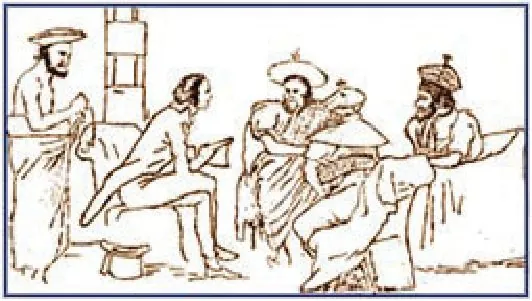 Fig 2.5 – John D'Oyly with Kandyan chiefs
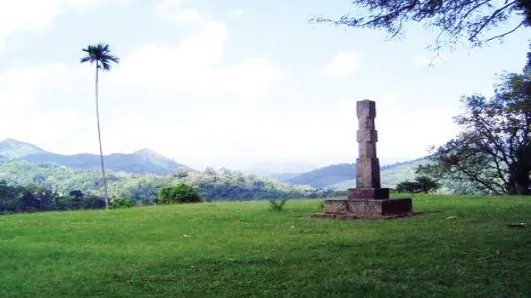 Fig 2.6 – Memorial at Medamahanuwara where the king was captured
Kandyan Convention, 2 March 1815
- Signed in Magul Maduwa by Brownrigg and Kandyan chiefs (some accounts say signed 10 March).
- Clauses 1–3: king and his family lose their rights; 4: kingdom ceded to British, rights of chiefs protected; 5: Buddhism, Devales, monks and temples protected; others – judicial arrangements.
- Wariyapola Sri Sumangala Thero is said to have pulled down the English flag and raised the Sinhala flag.
- Ended more than 2000 years of unbroken sovereignty; D'Oyly became Resident in Kandy.
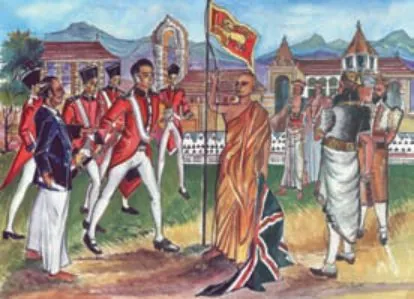 Fig 2.7 – Wariyapola Sri Sumangala Thero replacing the English flag with the Sinhala flag
2.4 Protests against Foreign Rule
The 1818 struggle (Sept 1817 – Oct 1818)
Causes
- Loss of a king and freedom (distant British king); poem lamenting a kingless land.
- Religious and cultural problems – distrust of non-Buddhist rulers; traditions of dress/ceremony ignored.
- Attack on aristocrats' status – cancellation of Kadawath badda tax; Muslim Hajji Marikkar appointed Madige Muhandiram (traditionally Sinhala) → Uva Wellassa chiefs angered.
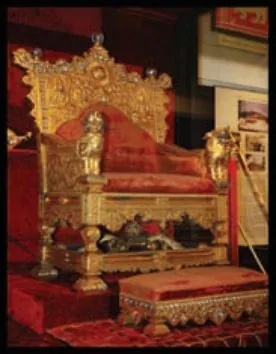 Fig 2.8 – Throne of King Sri Wickrama Rajasinghe
Course
- Doresami (claimed throne) in Wellassa; Douglas Wilson (Badulla agent) sent Hajji Muhandiram (killed); Wilson himself killed by an archer.
- Keppetipola Disawe was sent but joined the rebels; rebels crowned Doresami and made Keppetipola Maha Adikaram. Molligoda and Eknaligoda stayed loyal. Tooth Relic fell into rebel hands. Ehelepola arrested and taken to Colombo.
- Martial law (Feb 1818); scorched-earth policy; many arrests (Maththamagoda, Kobbekaduwa, Dambawinna, Galagedara, Basnayaka Nilame of Kataragama, Butawe, Ehelepola).
- British said the "king" was not the real Doresami; leaders quarrelled (Keppetipola, Madugalle, Pilimathalawe). Keppetipola and Madugalle executed on 26 November 1818.
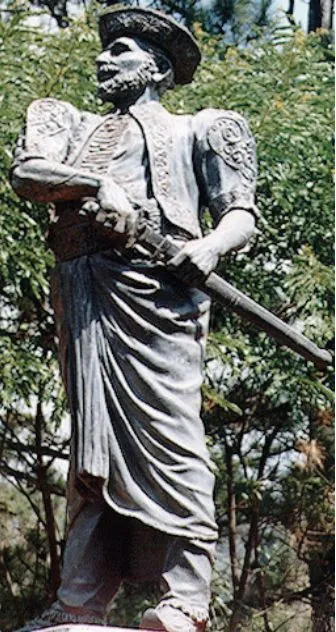 Fig 2.9 – Keppetipola Disawe
Failure: heavy retaliation, lack of weapons/resources, disorganization, exposure of Doresami, Molligoda's help.
Result: leaders executed or exiled; property confiscated; loyal chiefs rewarded; 21 November 1818 Proclamation (56 clauses) curtailed chiefs' power and introduced English law.
The 1848 struggle (Matale rebellion)
Causes
- Colebrooke reforms (1833) – land policy; Waste Lands (Crown Lands Encroachment) Ordinance of 1840 – land without proof of 30-year ownership confiscated, sold cheaply to Europeans for coffee; abolition of compulsory service (Rajakariya) and duty labour weakened Gam Sabha; new court system (Cameron) – villagers needed courts, English forms, lawyers and fees; fewer civil servants allowed to plant → officials distant from people.
- Torrington's new taxes (1848): stamp fee; cart and boat (catamaran) tax; shop tax; gun tax (2½ shillings); "body" (poll) tax – 3 shillings or 6 days' road labour; dog tax; the Blue Book survey raised suspicions.
Course: Protests in Colombo, Galle, Kandy, Badulla; farmers smashed guns in Badulla; ~4000 protested at Kandy Kachcheri; spread to Matale, Dambulla, Wariyapola, Kurunegala; leaders Gongalegoda Banda, Puran Appu, Dingirala, Diyes; Banda crowned at Dambulla temple; Matale the centre. Suppressed within two months; Banda whipped and exiled; Puran Appu executed; Rev. Kadahapola Thero shot after summary trial. Failure: disorganized, untrained rebels, British knowledge of roads, limited area. Result: Governor Torrington recalled after a committee; shop and dog taxes abolished, others revised; more respect for Buddhism.
Important Facts
- Three stages: 1796 coast → 1802 Crown colony → 1815 Kandy.
- Kandyan Convention 2 March 1815; rebellions 1818 and 1848.
- Leaders: Keppetipola (1818), Gongalegoda Banda and Puran Appu (1848).
Timeline
| Date | Event |
|---|---|
| 1600 | East India Company founded |
| 1623 | Ambon massacre |
| 1762 / 1782 / 1795 | Pybus / Boyd / Andrews |
| 1795–96 | Kew Letter; Dutch surrender |
| 1797 | Coastal rebellion |
| 1798–1802 | Dual administration |
| 1800 | MacDowell mission |
| 1803 | First invasion of Kandy |
| Jan–Mar 1815 | Invasion and Convention |
| 1817–18 | Uva-Wellassa rebellion |
| 1833 | Colebrooke reforms |
| 1848 | Matale rebellion |
Exam focus
- Why the British were interested in Sri Lanka.
- Stages of conquest; Kew Letter; Meuron Commission.
- Causes and failure of the 1818 and 1848 struggles.
- Convention clauses.
Map-marking guide
Trincomalee, Colombo, Galle, Jaffna, Mannar, Batticaloa; Kandy; Medamahanuwara; Wellassa (Uva); Matale, Dambulla, Kurunegala.